
High-Protein Foods: The List and How Much You Need
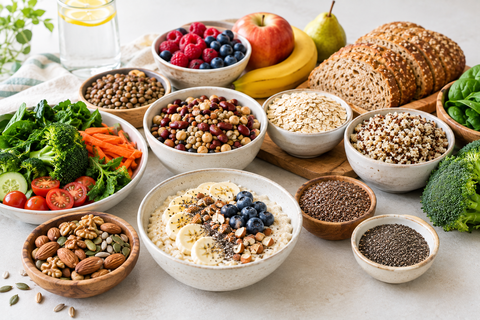
 Image generated with AI — may not represent the actual product.
In short
Protein is the nutrient people most often under-eat at breakfast and snacks. The foods that deliver it, the real daily target, and where nuts fit.
The Olaben Kitchen shares recipes and food inspiration only. This is not medical or nutritional advice. If you have a health condition, allergies or specific dietary needs, please consult a qualified professional.
Protein is the nutrient most people handle unevenly: enough at dinner, too little at breakfast and snacks. That matters, because protein is what keeps you full, steadies blood sugar alongside carbohydrate, and preserves muscle. Here is a practical list of high-protein foods, an honest look at how much you need, and where plant options like nuts and seeds fit.
How much protein do you actually need?
The basic guideline for a healthy adult is around 0.8 to 1g of protein per kilogram of body weight per day, with the higher end (and beyond) suiting people who are very active or building muscle. For a 60kg person that is roughly 48 to 60g a day.
The more useful practical point is spread. Most people load protein into dinner and get very little at breakfast. Aiming for some protein at every meal and snack, rather than a big evening dose, keeps you fuller through the day and supports muscle better. That is the honest, actionable version, more useful than any single number.

High-protein foods, by type
Animal sources (highest, most complete):
|
Food |
Protein (per 100g) |
|
Chicken breast |
~31g |
|
Fish (varies) |
~20–25g |
|
Eggs |
~13g (about 6g per egg) |
|
Greek yogurt |
~10g |
|
Cottage cheese |
~11g |
Plant sources (useful, often with fibre too):
|
Food |
Protein (per 100g) |
|
Lentils / beans (cooked) |
~8–9g |
|
Tofu |
~8g |
|
Edamame |
~11g |
|
Nuts and seeds |
~15–25g (per 100g; a portion is 28g) |
|
Oats |
~13g (dry) |
Greek yogurt is worth singling out because it is the easiest high-protein addition to a breakfast, which is exactly where most people fall short. More on it in our Greek yogurt guide.
Where nuts and seeds fit
Nuts and seeds look high in protein per 100g, but a realistic portion is 28g, so the protein per serving is modest: around 6g for almonds, less for cashews. They are a good protein contribution to a snack, not a protein source you build a meal around.
The seeds punch above the nuts here: pumpkin seeds carry about 8.6g protein per 28g, and dry-roasted edamame around 14g. If you are adding nuts or seeds partly for protein, the seeds do more work. The full breakdown is in our trail mix guide, and the individual nuts in cashews, almonds and walnuts.
Why protein at breakfast matters most
Breakfast is where protein is usually missing and where it does the most good. A carbohydrate-only breakfast, toast, a sugary cereal, plain granola, spikes blood sugar and leaves you hungry by mid-morning. Adding protein slows that rise and keeps you full to lunch, the same mechanism as pairing granola with Greek yogurt rather than eating it alone. The reasoning is in everyday energy.

A simple way to hit your protein
- Anchor each meal with a protein, not just dinner.
- Make breakfast the fix: eggs, Greek yogurt, or protein stirred into oats.
- Choose protein-plus-fibre snacks: yogurt, a handful of nuts and seeds, edamame.
- Use plants and animals together; you do not have to choose. Beans, tofu and seeds count.
FAQ
How much protein do I need per day?
Around 0.8 to 1g per kg of body weight for a healthy adult, more if very active. For 60kg, roughly 48 to 60g. Spreading it across meals matters as much as the total.
What foods are highest in protein?
Chicken, fish and eggs among animal foods; lentils, beans, tofu, edamame, nuts and seeds among plants. Greek yogurt is an easy high-protein addition.
Are nuts a good source of protein?
They contribute protein to a snack, about 6g per 28g for almonds, but a portion is modest. Seeds like pumpkin seeds have more per serving.
How do I get more protein at breakfast?
Eggs, Greek yogurt, or protein stirred into oats. Pair carbohydrate breakfasts like granola with a protein rather than eating them alone.
Is plant protein as good as animal protein?
Animal proteins are more complete, but a varied plant diet with beans, tofu, seeds and grains covers your needs well. You can combine both.
General information, not medical advice. Needs vary by person.
More from the kitchen
 GuidesMatcha Latte: Benefits, Caffeine, Calories, and the MethodMatcha is powdered whole green tea, so it is more concentrated than a steeped…
 GuidesHow to Make Brown Rice Milk (Naturally Sweet, Dairy-Free)Rice milk is the most allergy-friendly plant milk: no nuts, no soy, no gluten.…
 High-Fibre Foods: The List and Your Daily TargetMost people eat about half the fibre they need. The foods that fix it,…