
Almonds: Benefits, Calories, and the One That’s Actually Filling
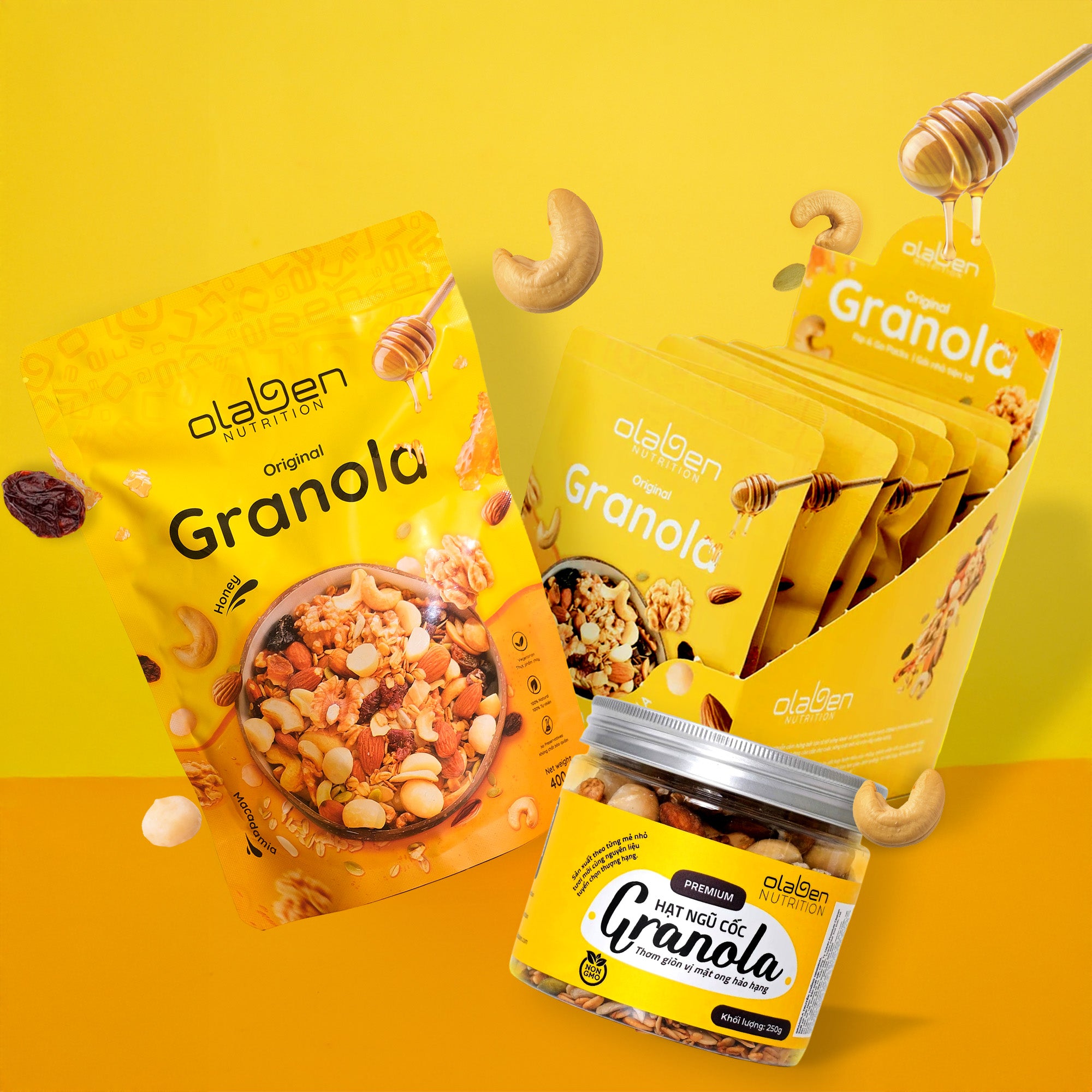
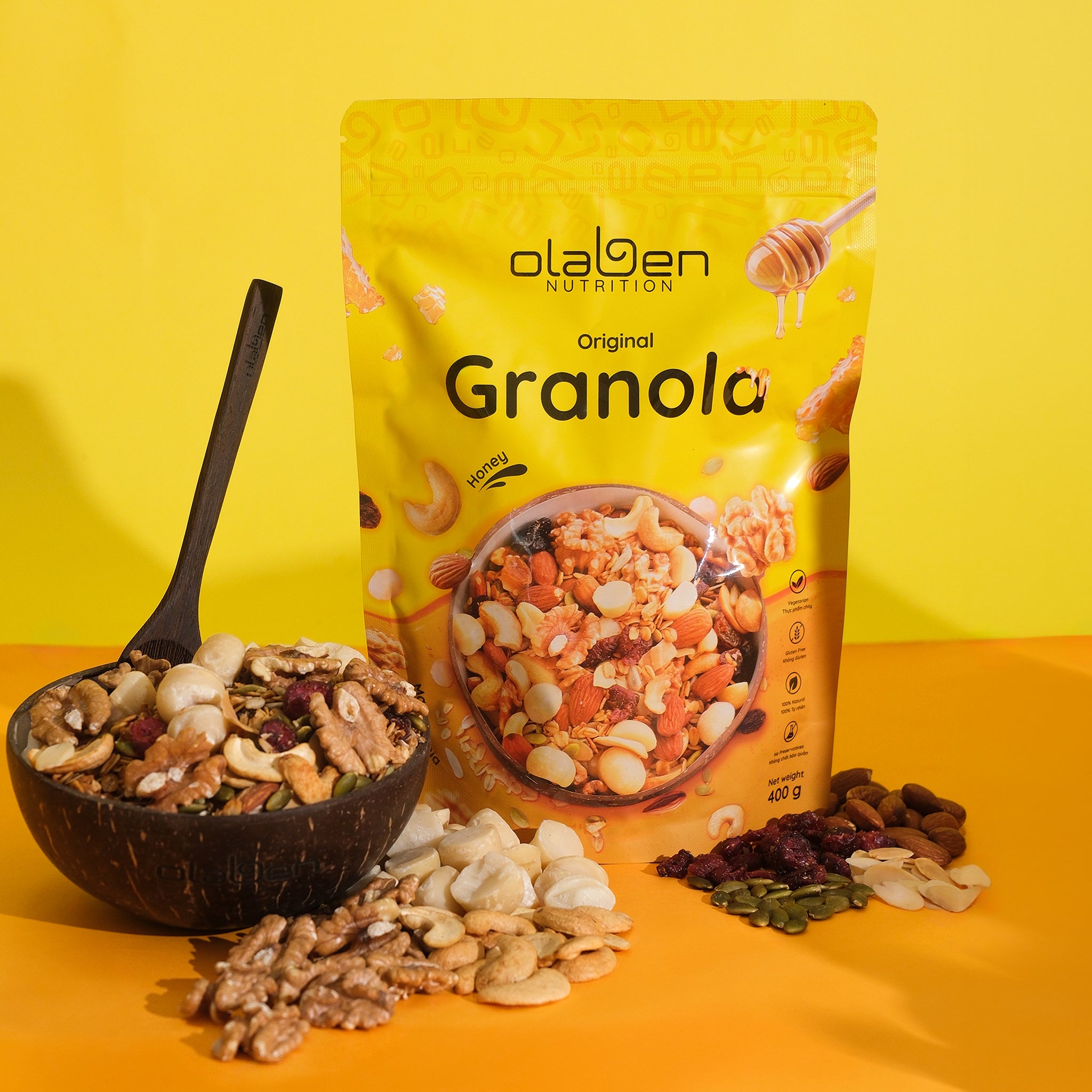
 Image generated with AI — may not represent the actual product.
In short
If cashews are the treat and macadamias are the luxury, almonds are the workhorse: the nut with the best all-round nutrition and the most research behind it.
The Olaben Kitchen shares recipes and food inspiration only. This is not medical or nutritional advice. If you have a health condition, allergies or specific dietary needs, please consult a qualified professional.
If cashews are the treat and macadamias are the luxury, almonds are the workhorse: the nut with the best all-round nutrition and the most research behind it. They also have a rare quality among nuts, they are genuinely filling.
What 23 almonds give you
The standard serving is 28g, about 23 almonds: roughly 164 calories, 6g protein, 3.5g fibre, 14g fat, mostly monounsaturated.
Two numbers matter here. The fibre is high for a nut, 3.5g against about 1g for cashews, which is a big part of why almonds keep you fuller. And the vitamin E: one serving delivers around 37% of the daily requirement, more than almost any other whole food. Vitamin E is an antioxidant, and this is the honest basis for the “good for skin” reputation, though eating almonds is not a skincare routine.
Almonds also bring magnesium and calcium in useful amounts.

What they are good for
Heart health, the best-studied case in the category. Almonds carry the qualified US health claim like other nuts, but they also have more direct research behind them, with trials showing improved LDL cholesterol when almonds replace less healthy snacks. The pattern is consistent: nuts in place of refined snacks, not on top of them.
Fullness and weight. This is where almonds genuinely stand out. The combination of protein, fibre and fat makes them more satiating than most nuts, and interestingly, a portion of the fat in whole almonds is not fully absorbed because it stays locked in the cell walls. So the calories you get from chewing whole almonds are slightly lower than the label suggests. Not a licence to overeat, but a real, quiet point in their favour.
Blood sugar. Eaten with or before a carbohydrate, almonds blunt the glucose rise, the same fibre-and-fat mechanism covered in everyday energy.
The calorie note
Almonds are calorie-dense like all nuts, 164 per 28g, and easy to over-pour. But they are the nut where the fibre does the most work to stop you, so a measured handful tends to satisfy. Weigh 28g once to see what 23 almonds looks like; it is a modest pile.
The thing to watch is not the plain almond but the coating. Honey-roasted, chocolate and heavily salted versions add sugar or sodium on top of a good base. Our honey butter roasted almonds are a treat version, best enjoyed as one, while plain almonds are the everyday option.
Who should take care
- Tree nut allergy, as with all nuts.
- Kidney stone history. Almonds are relatively high in oxalates, which matters for people prone to calcium-oxalate stones. Worth a word with your doctor if that is you.
- Iron or zinc concerns. Like other nuts, almonds contain phytates that modestly reduce mineral absorption; soaking helps, and a varied diet makes it a non-issue.

Quick reference
|
|
Per 28g (23 almonds) |
|
Calories |
~164 |
|
Protein |
6g |
|
Fibre |
3.5g (high for a nut) |
|
Fat |
14g, mostly monounsaturated |
|
Standout |
Vitamin E (~37% daily), filling |
FAQ
Are almonds good for you?
Yes, and they are arguably the best all-round nut: high fibre, high vitamin E, filling, with solid heart research. Portion still applies.
How many almonds should I eat a day?
A serving is 28g, about 23 almonds. That is a sensible daily amount.
Do almonds help you lose weight?
They are filling, and whole almonds give slightly fewer absorbed calories than the label because some fat stays trapped in the cell walls. They are not a fat-burner, but they suit weight management better than most snacks.
Are almonds good for skin?
They are rich in vitamin E, an antioxidant, which is the basis for the reputation. Eating them supports overall nutrition; they are not a substitute for skincare.
Should I soak almonds?
Soaking softens them and reduces phytates slightly, which can aid mineral absorption. It is optional and a matter of preference.
General information, not medical advice. Values are typical and vary by product.
More from the kitchen
 Plant-Based Eating: Protein and the Nutrients to WatchYou can get enough protein on a plant-based diet, and the complete-protein rule is…
 What to Eat with Diarrhea: Gentle Foods and What to AvoidHydration matters more than any food, then gentle, low-fibre foods while you recover. What…
 Green Tea: Real Benefits, Caffeine, and the Weight-Loss TruthGreen tea is a genuinely good drink with one heavily oversold claim. The antioxidants,…