
What’s Actually in Good Granola? A Simple Ingredient Guide
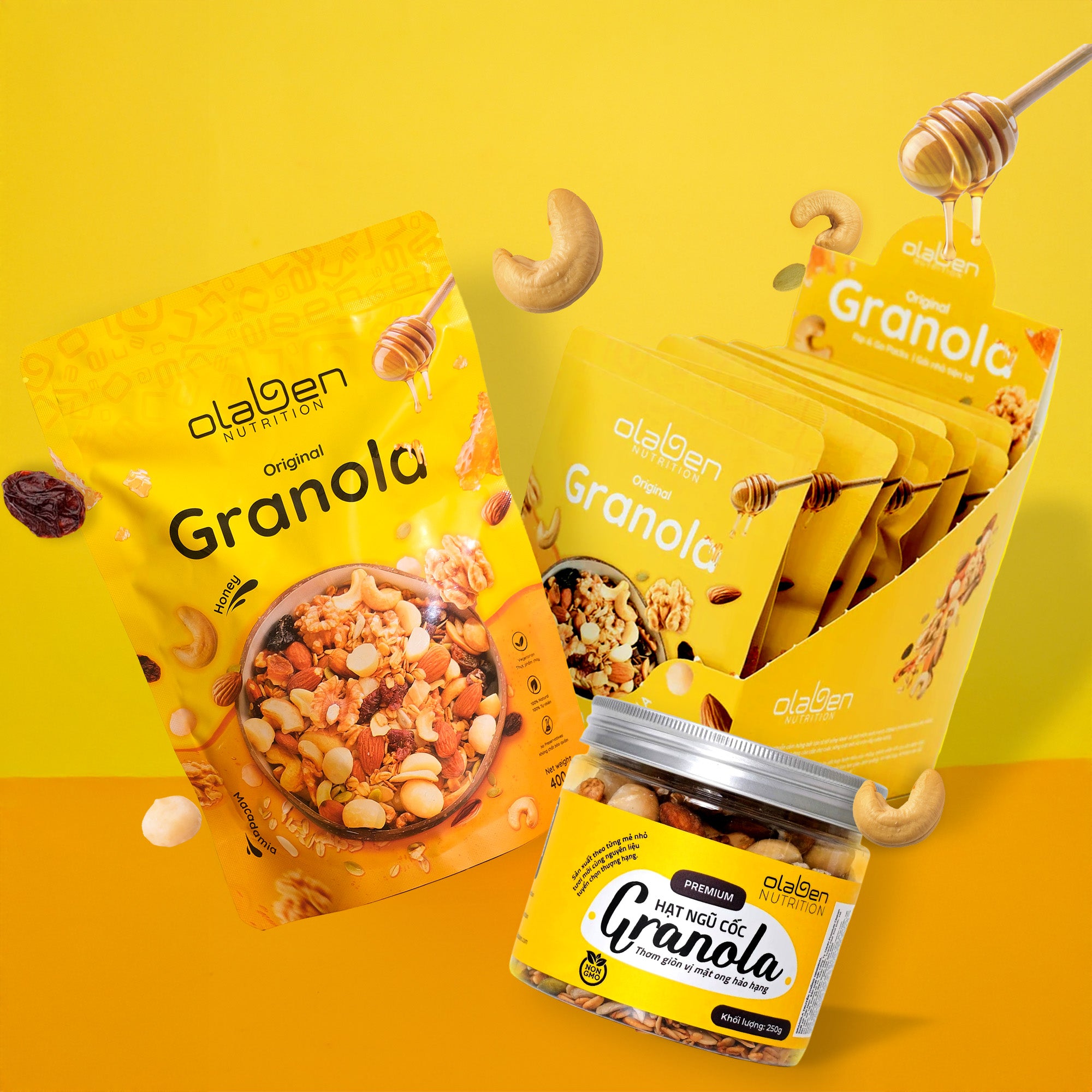
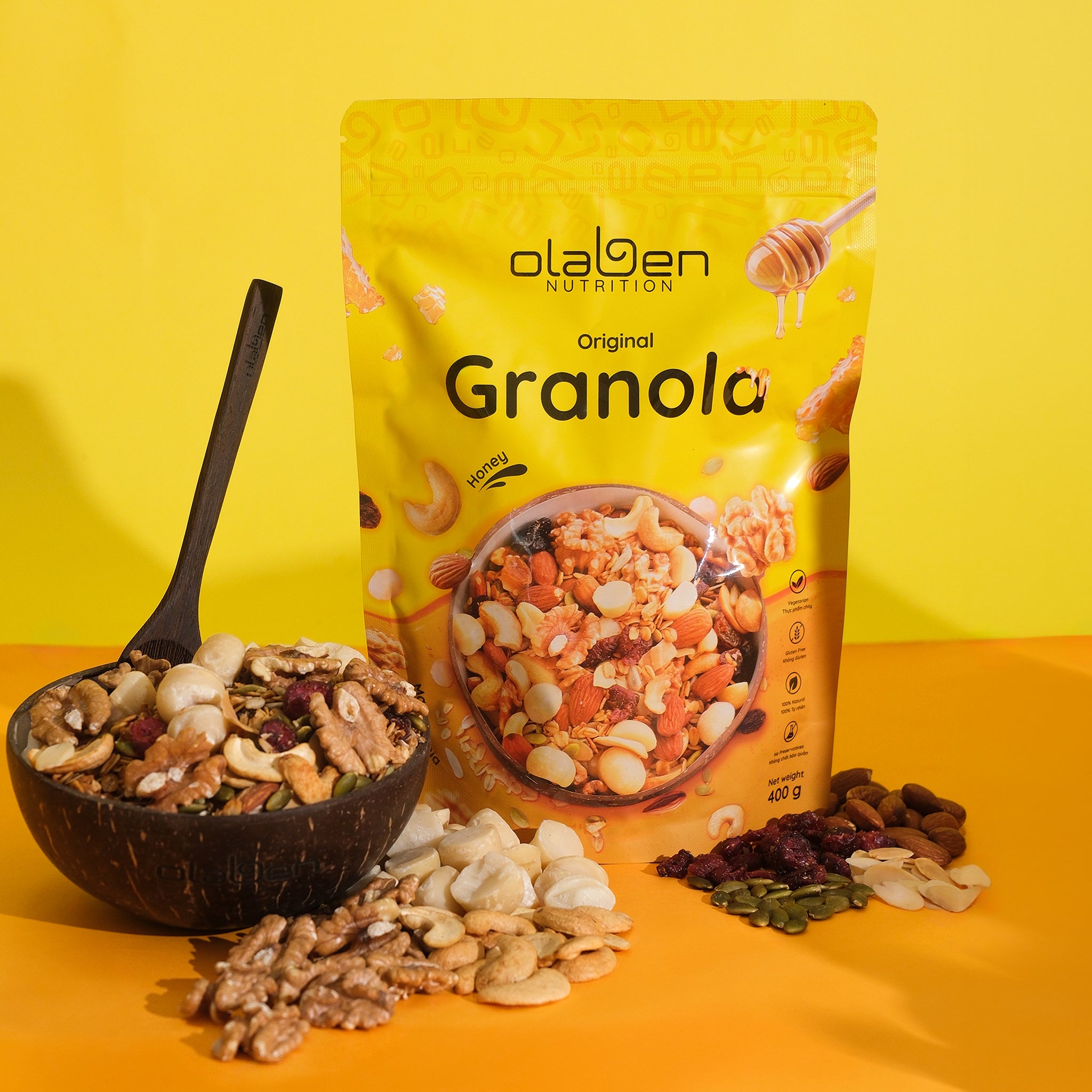
 Image generated with AI — may not represent the actual product.
In short
What to look for in quality granola ingredients, decoded. What granola consists of, what the label should include, and the added-sugar rule that separates real granola from dessert.
The Olaben Kitchen shares recipes and food inspiration only. This is not medical or nutritional advice. If you have a health condition, allergies or specific dietary needs, please consult a qualified professional.
Granola has a healthy reputation, but not every bag earns it. Some are closer to dessert in a pouch than a wholesome breakfast. So what does granola consist of, what should you look for in quality granola ingredients, and how do you tell a genuinely good one from a sugary impostor on a crowded shelf? Let’s walk through it ingredient by ingredient, the same way we think about every batch we make.
What does granola consist of?
At its simplest, granola is whole rolled oats mixed with nuts, seeds and a binder of sweetener plus a little oil, then baked until golden and crunchy. Many recipes also add dried fruit, coconut or spices for flavor. That is the entire honest formula: oats, nuts, seeds, a touch of sweetener, a good fat, and time in the oven.
That also tells you what granola is not. It is not supposed to be a cereal held together by syrup, or a candy bar wearing an oat costume. The magic, and the marketing tricks, live in the details below.

Start with whole oats
Oats are the backbone of any good granola. They bring slow-digesting carbohydrates, fiber and a naturally nutty flavor that does not need much help.
What you want to see at the top of the ingredient list is whole rolled oats, sometimes called old-fashioned oats. They hold their shape through baking and give you that satisfying chew. Be a little cautious if oats are buried halfway down the list, because that usually means something cheaper or sweeter is doing most of the work. (If you want to understand the different oat cuts, our guide on rolled vs steel-cut oats breaks it down.)
Real nuts and seeds
This is where quality granola separates itself. Nuts and seeds add healthy fats, plant protein and texture, and they help keep you full long after breakfast.
Look for recognizable, whole ingredients such as:
- Cashews, almonds or walnuts, ideally in visible pieces rather than dust
- Pumpkin seeds and sunflower seeds for crunch and minerals
- Chia or flax seeds for a fiber and omega-3 boost
- Coconut flakes for natural sweetness and aroma
If a label lists “nut flavoring” instead of actual nuts, that is a quiet signal the recipe is cutting corners. The same goes for “natural flavors,” a catch-all term that can stand in for processed additives rather than real food.
How it is sweetened (this matters most)
If you only check one thing on the label, check the sweetener. This single factor decides whether your granola is a smart breakfast or a sugar bomb.
Here is the upgrade most shoppers miss: read added sugar, not just total sugar. A granola with real dried blueberries or dates will show higher total sugar, but that fruit sugar behaves very differently from syrup poured in for taste. Two granolas can both list 3g of added sugar and be equally smart choices, even if their total-sugar numbers look different.
Good granola uses a modest amount of natural sweetener, just enough to help everything clump and caramelize. Think honey, maple syrup or a little coconut sugar.
A simple, dietitian-style target:
- 5g of added sugar per serving or less is the line to aim for
- 3g or below is excellent
- 15g or more of total sugar usually means dessert, not breakfast
Be wary when you see:
- Sugar, glucose syrup or corn syrup listed in the first few ingredients
- Several different sugars spread across the list so each one looks smaller
- Sugar alcohols or sweeteners like stevia and monk fruit used to fake a low-sugar number
A touch of sweetness is part of what makes granola lovely. A flood of it is what gives granola its bad name.

What the label for granola with nuts should include
When you flip the bag over, a quality granola with nuts should show you a short, readable list and a few numbers that line up. Here is the checklist:
- Whole rolled oats listed first. The base should be the biggest ingredient.
- Named, real nuts and seeds, such as almonds, cashews, walnuts, pumpkin or sunflower seeds, not “nut flavoring.”
- A single, natural sweetener in a modest amount (honey, maple, coconut sugar).
- Added sugar of 5g or less per serving.
- Fiber of at least 3g per serving, ideally 5 to 6g.
- Protein of at least 5g per serving, ideally 7 to 8g, which is where the nuts and oats earn their keep.
- A healthy fat source like the oil from nuts, seeds or a modest amount of coconut oil, not hydrogenated or heavily refined oils.
- A realistic serving size (more on that trap below).
- A short ingredient list you can actually pronounce, with no artificial colors or long additive chains.
If a granola with nuts ticks those boxes, the label is doing its job honestly.
The serving-size trap
This is the trick that fools even careful shoppers. Many brands set the serving size at a tiny 1/4 cup so the calorie and sugar numbers look gentle. The problem is nobody pours a 1/4 cup into a bowl.
Do the math on a real portion. A 1/4 cup serving listed with 6g of added sugar becomes about 12g of added sugar in a normal bowl, and the calories double too. Always glance at the serving size first, then picture the amount you actually eat. Our full walkthrough on how to read a nutrition label shows exactly how to do this in 30 seconds.
What to leave on the shelf
A few ingredients tend to show up when a brand is prioritizing cost or shelf life over your wellbeing:
- Hydrogenated or heavily refined oils, often used in place of better fats
- Artificial flavors and colors
- “Natural flavors” standing in for real nuts or fruit
- Isolated added fibers like chicory root, used to inflate the fiber number (it may not act like fiber from whole food)
- Long lists of additives you cannot pronounce
- Candied fruit that is mostly sugar with a little fruit attached
None of these are necessary to make granola taste wonderful. Real ingredients do that on their own.
How to spot good granola on a label
You do not need to be a nutritionist to read a bag well. Here is a quick side-by-side of the signals to look for.
|
Signal |
Good granola |
Poor granola |
|
First ingredient |
Whole rolled oats |
Sugar or syrup |
|
Nuts and seeds |
Real, visible, named pieces |
“Flavoring” or barely any |
|
Sweetener |
One natural source, modest |
Multiple sugars, high total |
|
Added sugar per serving |
5g or less (3g is excellent) |
12g or more |
|
Fiber per serving |
3g or more (5 to 6g ideal) |
Under 3g, or faked with chicory root |
|
Protein per serving |
5g or more (7 to 8g ideal) |
Low, with no real nuts |
|
Fats |
Nuts, seeds, modest coconut oil |
Hydrogenated or refined oils |
|
Ingredient list |
Short and readable |
Long, with additives |
If you want to go deeper on serving sizes and percentages, our guide on how to read a nutrition label breaks it down clearly. And if you are still deciding what to put in your bowl, the difference between granola vs muesli is worth a quick read. For why that fiber number matters so much, see fiber, simply explained.
How to eat it for a balanced bowl
Even great granola is best as part of a balanced breakfast rather than a giant solo bowl. Pair a 40 to 50g serving (about a small handful) with a protein source like yogurt or cottage cheese, plus some fresh fruit. The protein and fiber turn it into a meal that actually keeps you full, instead of a quick sugar lift.
FAQ
What should I look for in quality granola ingredients?
Whole rolled oats listed first, real named nuts and seeds, one natural sweetener in a small amount, 5g or less of added sugar, at least 3g fiber and 5g protein per serving, and a short ingredient list with no hydrogenated oils or artificial additives.
What should the label for granola with nuts include?
Named nuts and seeds (not “nut flavoring”), oats as the first ingredient, a modest natural sweetener, added sugar of 5g or less, and clear fiber and protein numbers. A short, readable list is a good sign.
What does granola consist of?
At its core, whole rolled oats, nuts, seeds and a natural binder like honey or oil, baked until crunchy. Many recipes add dried fruit, coconut or spices for flavor.
Is granola healthy?
It can be very healthy when it is built on oats, nuts and seeds with little added sugar. The health value depends almost entirely on the ingredients, so the label tells the real story.
Why is some granola so high in sugar?
Sugar makes oats clump, caramelize and taste indulgent, so cheaper brands lean on it heavily. Quality granola uses just enough to bind and toast the mix.
How much granola should I eat?
A typical serving is around 40 to 50 grams, roughly a small handful. Pair it with yogurt or milk and some fresh fruit for a balanced breakfast.
Good granola is not complicated. It is honest oats, real nuts and seeds, and a light, natural sweetness, nothing you need a dictionary to understand. If that sounds like the breakfast you want, explore our Olaben granola collection or start with our crowd favorite, the Premium Granola Original. Prefer a grain-free option with real nuts and coconut? Try the Crispy Coconut No-Grain Granola, then find your everyday bowl in the full granola collection.
More from the kitchen
 GuidesHow to Make Salt-Roasted Cashews (Oven Method)Crunchier, less oily, and less salty than store-bought. The brine trick that makes salt…
 GuidesHow to Make Oat Milk at Home (No Slime, No Gum)Homemade oat milk goes slimy for one specific reason. The cold-blend, short-blend, no-heat method…
 GuidesBanana Oat Cookies: 3 Ingredients, No Flour or SugarRipe banana and oats make a soft cookie with no flour and no added…