
How to read a nutrition label, honestly
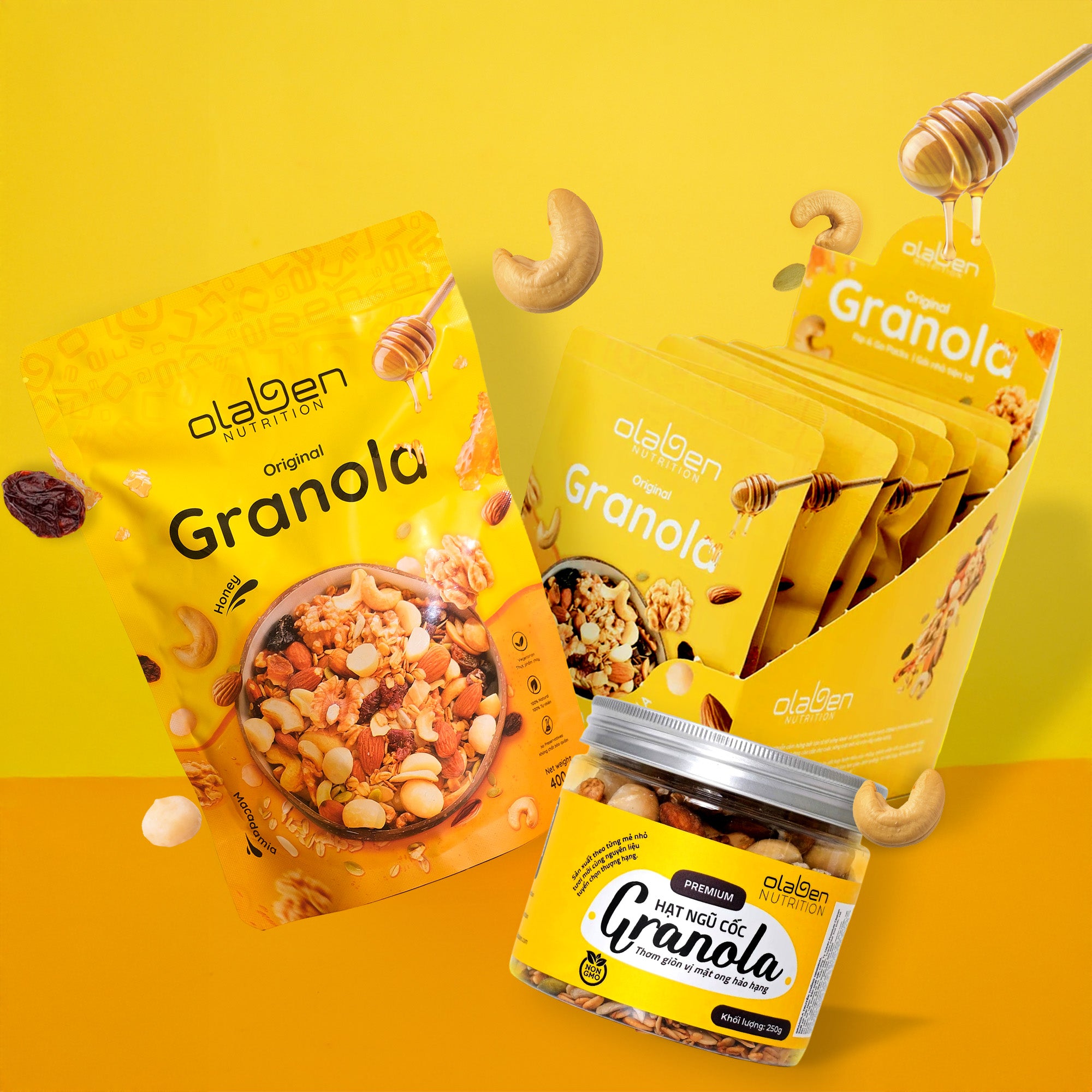
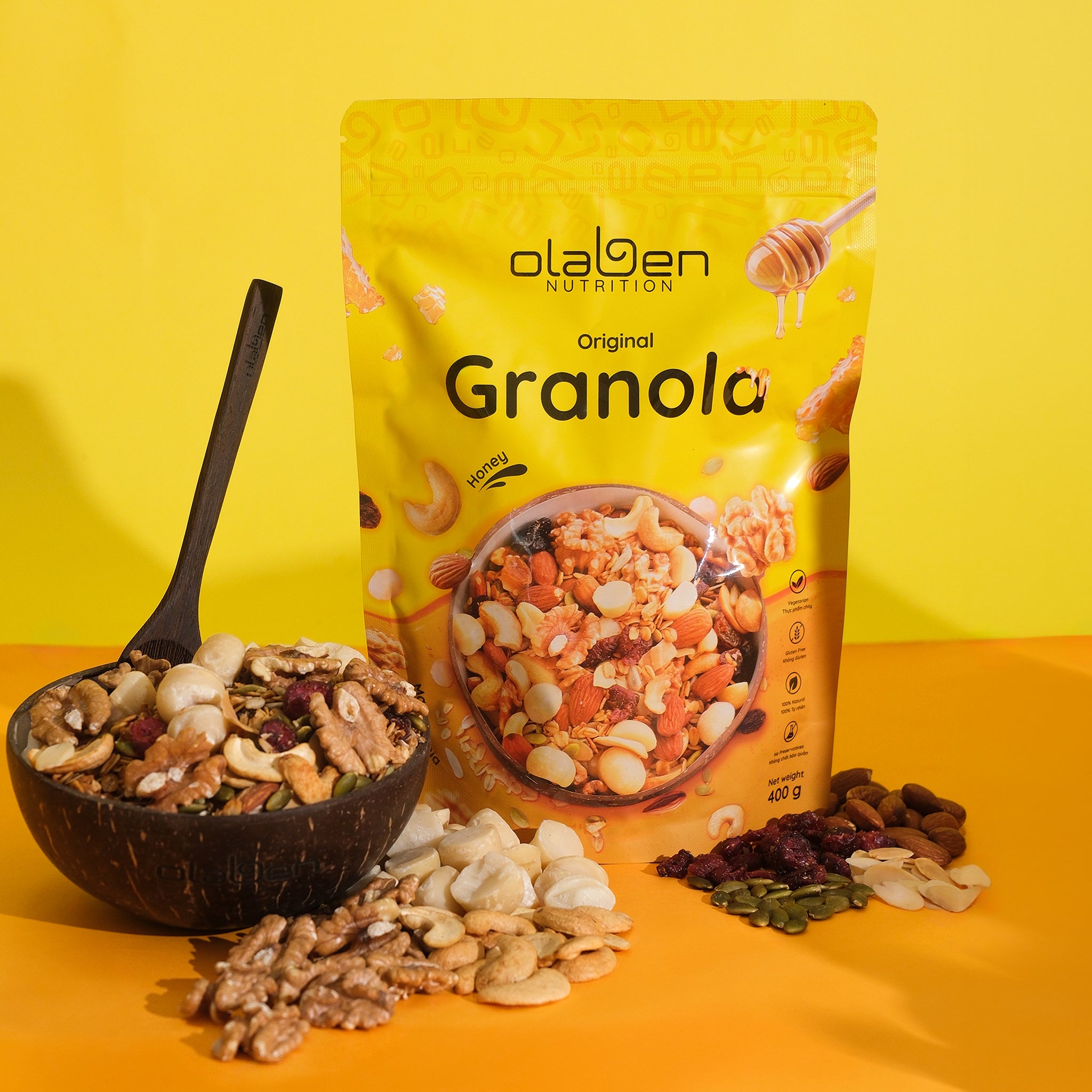
 Image generated with AI — may not represent the actual product.
In short
The Olaben Kitchen shares recipes and food inspiration only. This is not medical or nutritional advice. If you have a health condition, allergies or specific dietary needs, please consult a qualified professional.
Most of us glance at the front of a package, see a friendly word like “natural” or “high fibre,” and drop it in the basket. The real story is on the back, in the small print. Learning how to read a nutrition label takes about thirty seconds once you know where to look, and it quietly changes how you shop. Here is the honest version, with no jargon and no fear.
Start with the serving size (the trick most people miss)
Before you read a single number, find the serving size. Everything else on the panel is calculated for that exact amount, and packaged foods love to set it low.
A granola pouch might list 30g as a serving, which is roughly two tablespoons. If you pour a real bowl, you are probably eating 60g or 90g, so you need to double or triple every number you see. The calories, the sugar, the fat: all of it scales with how much you actually eat.
So step one is always this. Look at the serving size, then look at how many servings are in the pack. A “100 calorie” snack that contains three servings is a 300 calorie snack if you finish it in one sitting.
Calories in context
Calories are not the enemy, and they are not the whole picture either. A handful of nuts and a handful of candy can carry the same calorie count while doing completely different things in your body.
Use calories as a rough budget, not a verdict. What matters more is where those calories come from. Two hundred calories of oats, seeds and dried fruit will keep you full for hours. Two hundred calories of sweetened cereal can leave you hungry again by mid morning. Read the rest of the panel before you decide whether a number is “good.”
Sugar, and how to spot hidden added sugar

This is where labels get sneaky. The panel usually shows total sugars, which combines sugar that occurs naturally in the food (like the sugar in milk or whole fruit) with sugar that a manufacturer added.
To find the added sugar on a label, you often have to read the ingredients list, because not every label separates it out. Watch for these names, which are all added sugar wearing different costumes:
- Cane sugar, brown sugar, invert sugar
- Glucose syrup, corn syrup, high fructose corn syrup
- Maltose, dextrose, anything ending in “ose”
- Concentrated fruit juice, malt extract, honey added for sweetness
A useful rule of thumb: if a sweetener shows up in the first three ingredients, sugar is doing a lot of the heavy lifting in that product. Aim for foods where the sweetness comes mostly from real fruit, not from a syrup added at the factory.
Fibre and protein, the numbers that help you
If sugar is the number to watch, fibre and protein are the numbers to chase. They are the part of the label that actually works for you.
Fibre slows digestion, feeds your gut bacteria and keeps you full. A genuinely good breakfast food should give you a meaningful amount per serving, not a token gram. Protein does similar work for fullness and helps steady your energy. If you want the deeper picture on why this matters, our short guide on fibre explained walks through it without the science lecture.
When you compare two products, the better choice is usually the one with more fibre and protein and less added sugar for the same serving size.
Reading the ingredients list (order matters)
Here is one of the most reliable label-reading skills, and almost nobody uses it. Ingredients are listed by weight, from most to least. The first ingredient is the biggest part of the product.
So if you pick up a “oat and honey” granola and the ingredients begin with sugar, then oil, then oats, you are mostly buying sweetened oil. The order tells you the truth that the front of the pack will not.
A short ingredients list of things you recognise is almost always a better sign than a long list of words you cannot pronounce. This is exactly the test we apply to our own recipes, and you can see how we think about it in what is in good granola.
Per 100g vs per serving (table)
Vietnamese labels, and many international ones, show two columns: per 100g and per serving. The per 100g column is your secret weapon, because it lets you compare any two products fairly, even when their serving sizes are different.
Use per serving to understand what one realistic portion gives you. Use per 100g to compare products on the shelf side by side.
|
What to check |
Where to look |
What “good” looks like (per 100g) |
|
Serving size |
Top of the panel |
Honest, close to what you’d really eat |
|
Calories |
Per serving and per 100g |
Reasonable for the portion, not the trick |
|
Total sugar |
Per 100g |
Lower is better; under 5g is low, over 22.5g is high |
|
Added sugar |
Ingredients list |
Not in the first three ingredients |
|
Fibre |
Per 100g |
Higher is better; 6g or more is a strong sign |
|
Protein |
Per 100g |
Higher helps with fullness |
|
Ingredients |
Full list |
Short, recognisable, real food first |
A quick 30-second label check
When you are standing in the aisle, run this fast routine:
- Check the serving size and how many servings are in the pack.
- Glance at calories, but do not stop there.
- Read total sugar per 100g, then scan the ingredients for added sugar.
- Look for decent fibre and protein.
- Read the first three ingredients. If sugar or oil leads, put it back.
That is the whole skill. Thirty seconds, every time, and you will outgrow the marketing on the front.

FAQ
Should I trust “no added sugar” claims?
Mostly, but still check the ingredients list. Some products replace sugar with concentrated fruit juice, which behaves much like added sugar in your body.
Is per 100g or per serving more useful?
Per 100g is best for comparing two products fairly. Per serving tells you what one real portion delivers.
What sugar level counts as low?
As a guide, under 5g of sugar per 100g is low and over 22.5g per 100g is high.
Reading labels well is a small habit with a big payoff, and it makes choosing better food simple instead of stressful. If you want a breakfast that already passes the 30-second check, our Olaben granola is built on short, honest ingredients with real fibre and no factory syrup. Explore the range and taste the difference: shop Olaben granola.
More from the kitchen
 Plant-Based Eating: Protein and the Nutrients to WatchYou can get enough protein on a plant-based diet, and the complete-protein rule is…
 What to Eat with Diarrhea: Gentle Foods and What to AvoidHydration matters more than any food, then gentle, low-fibre foods while you recover. What…
 Green Tea: Real Benefits, Caffeine, and the Weight-Loss TruthGreen tea is a genuinely good drink with one heavily oversold claim. The antioxidants,…