
Fibre, simply explained: why your breakfast needs it
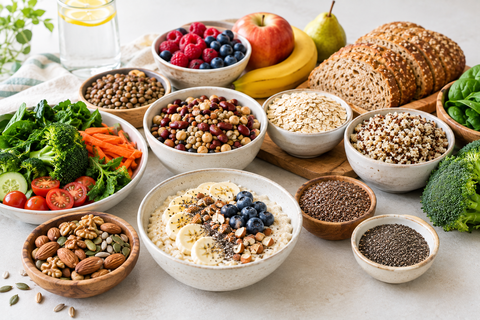
 Image generated with AI — may not represent the actual product.
In short
The Olaben Kitchen shares recipes and food inspiration only. This is not medical or nutritional advice. If you have a health condition, allergies or specific dietary needs, please consult a qualified professional.
Fibre is one of those words on every nutrition label, yet most of us would struggle to say what it actually does. The short version is this: fibre is the part of plant food your body cannot fully break down, and that is exactly why it is so useful. It travels through your gut doing important work before it leaves, and the morning is the easiest time to get a head start on it.
What fibre actually is
Fibre is a type of carbohydrate found in plants. Unlike sugars and starches, your small intestine cannot digest it into simple fuel. Instead it passes through largely intact, which sounds unhelpful until you understand the journey.
Along the way, fibre adds bulk, slows the release of sugar into your blood, feeds the good bacteria living in your gut, and helps everything move along on schedule. You find it in whole grains, fruits, vegetables, legumes, nuts and seeds. You will never find it in meat, fish, eggs or dairy, because fibre is a plant-only nutrient. That single fact explains why a plant-forward breakfast tends to leave you steadier and fuller than a plate of eggs alone.
Soluble vs insoluble fibre
Most foods contain both kinds, but they behave differently and it helps to know which is which.
- Soluble fibre dissolves in water and forms a soft gel in your gut. This gel slows digestion, helps blunt blood sugar spikes, and can support healthier cholesterol levels. Oats, barley, apples, citrus, beans and chia seeds are rich in it.
- Insoluble fibre does not dissolve. It adds bulk and acts like a gentle broom, keeping your digestion regular and helping prevent constipation. Whole wheat, brown rice, nuts, and the skins of fruit and vegetables carry plenty.
You do not need to track them separately. Eating a range of whole plant foods gives you both without any effort. A bowl of oats topped with fruit and seeds, for example, delivers both types in a single sitting.
Why fibre keeps you full (weight and gut)

Fibre is a quiet hero for appetite control. Because it slows how fast your stomach empties and how quickly sugar enters your blood, you avoid the sharp energy crash that often follows a refined-carb breakfast. That crash is usually what sends you hunting for a snack by mid-morning.
High-fibre foods also take longer to chew and physically fill more space in your stomach, so you feel satisfied on fewer calories. Over time this makes it easier to manage weight without feeling deprived.
There is a gut story too. Soluble fibre is food for the trillions of bacteria in your large intestine. When they ferment it, they produce short-chain fatty acids that nourish the cells lining your gut and support your immune system. A well-fed microbiome is linked to better digestion, steadier mood and lower inflammation. In simple terms, feeding your gut bacteria is one of the kindest things you can do at breakfast.
How much fibre do you need per day
Most adults fall well short of the recommended intake. Here is a simple guide.
|
Group |
Recommended fibre per day |
|
Women (under 50) |
25 g |
|
Men (under 50) |
38 g |
|
Women (over 50) |
21 g |
|
Men (over 50) |
30 g |
|
Children (4 to 8) |
17 to 25 g |
|
Teens (9 to 18) |
25 to 31 g |
A practical target for most adults is around 25 to 30 grams. Increase your intake gradually rather than all at once, and drink plenty of water, since fibre works best when it has fluid to move with.
High-fibre foods to add

Hitting your target is easier when you know which foods carry the most. These figures are approximate per typical serving.
|
Food |
Serving |
Fibre |
|
Chia seeds |
2 tbsp |
10 g |
|
Black beans |
1/2 cup cooked |
7.5 g |
|
Rolled oats |
1/2 cup dry |
4 g |
|
Almonds |
1 small handful (28 g) |
3.5 g |
|
Apple (with skin) |
1 medium |
4.4 g |
|
Avocado |
1/2 fruit |
5 g |
|
Raspberries |
1/2 cup |
4 g |
|
Whole wheat bread |
1 slice |
2 g |
Even small swaps add up. Choosing whole fruit over juice, leaving the skin on, and adding a spoon of seeds can quietly push your daily total in the right direction.
Easy ways to get more fibre at breakfast
Breakfast is the easiest meal to fibre-load because the best ingredients are already morning staples.
- Start with oats or a wholegrain base instead of refined cereal.
- Top with berries or sliced apple for fruit fibre and natural sweetness.
- Add a tablespoon of chia or ground flax, which dissolves into yogurt or porridge.
- Sprinkle a handful of nuts for crunch, healthy fats and extra grams.
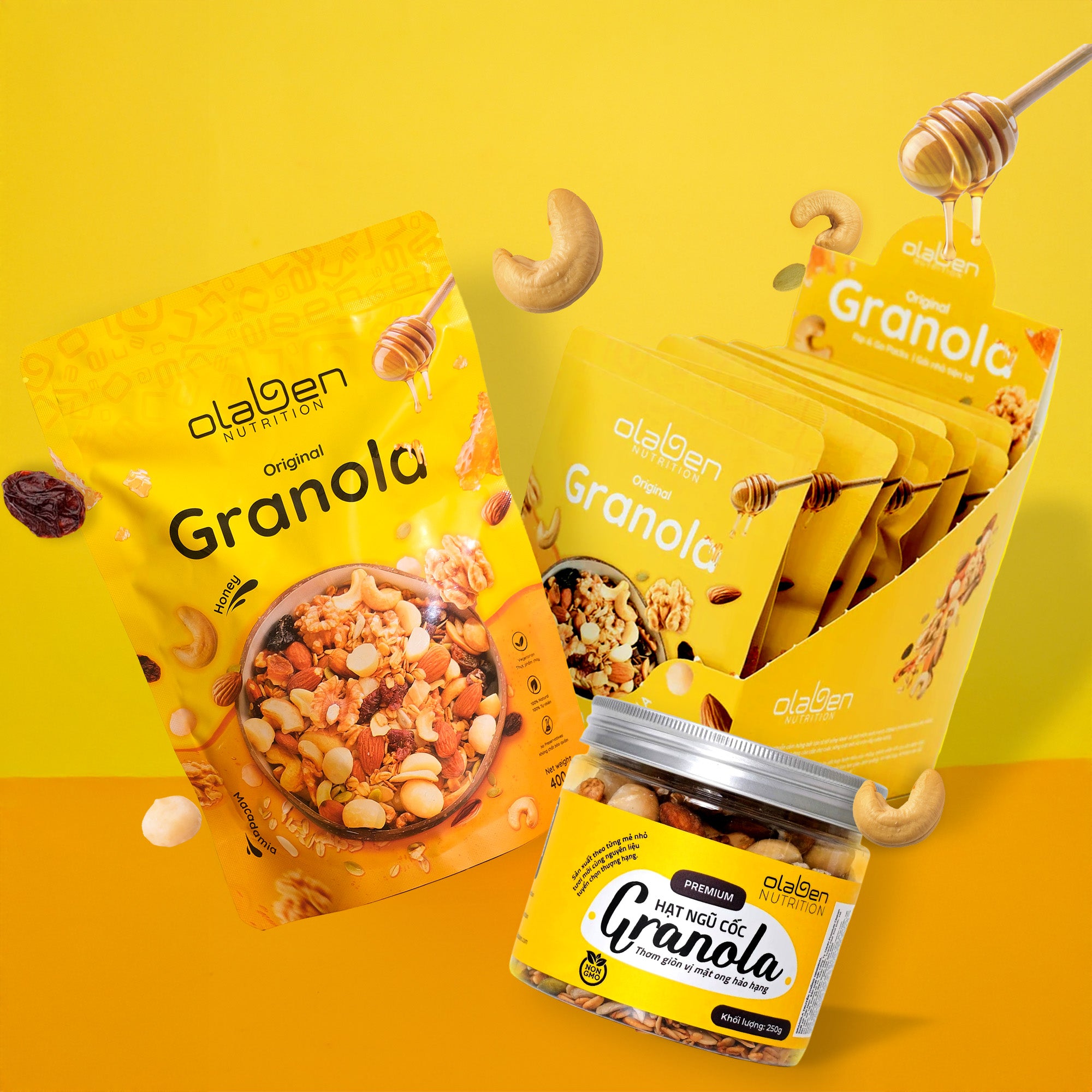
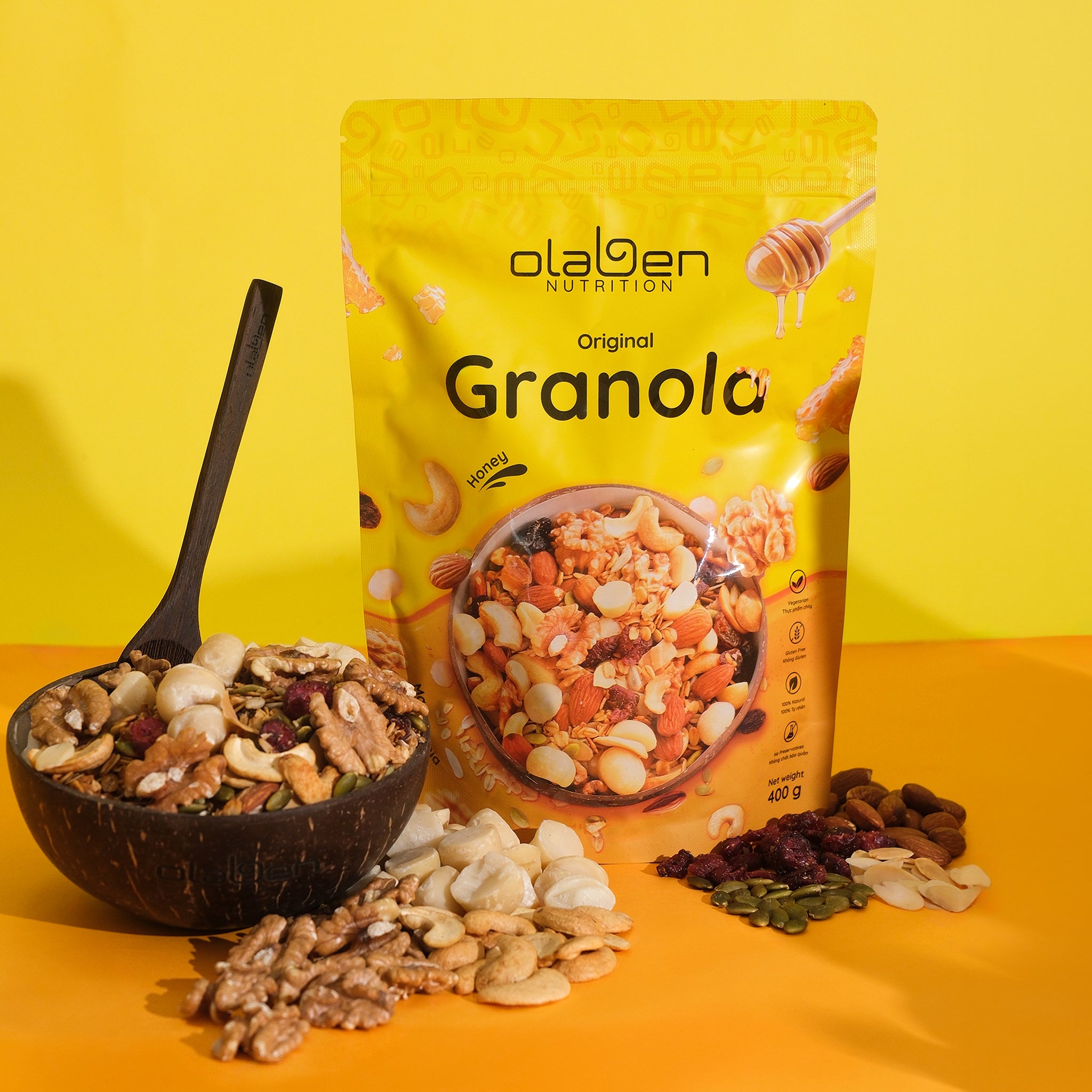
- Choose a granola built on whole oats, nuts and seeds rather than sugar.
A bowl of Olaben granola with yogurt and fresh fruit is an effortless way to land 8 to 10 grams of fibre before you even leave the house. If you want to think about the bigger picture, see our guide to building a balanced breakfast, and to understand what separates a quality blend from a sugary one, read what is in good granola.
FAQ
Can I eat too much fibre?
Yes, going from low to very high intake suddenly can cause bloating or gas. Increase gradually over a week or two and drink more water as you do.
Do fibre supplements work as well as food?
Supplements can help in a pinch, but whole foods give you fibre alongside vitamins, minerals and antioxidants. Food first is always the better default.
Is fibre good for weight loss?
It supports it indirectly. Fibre keeps you full longer and steadies your energy, which makes it easier to eat the right amount without willpower battles.
Which fibre is best for digestion?
Both matter. Insoluble fibre keeps things regular, while soluble fibre feeds your gut bacteria. A varied plant-based diet covers both.
Fibre is not complicated, and your breakfast does not need to be either. Start your morning with a fibre-rich bowl and let it do the quiet work for the rest of your day. Explore the Olaben granola range and make the easiest upgrade to your routine today.
More from the kitchen
 GuidesMatcha Latte: Benefits, Caffeine, Calories, and the MethodMatcha is powdered whole green tea, so it is more concentrated than a steeped…
 GuidesHow to Make Brown Rice Milk (Naturally Sweet, Dairy-Free)Rice milk is the most allergy-friendly plant milk: no nuts, no soy, no gluten.…
 High-Fibre Foods: The List and Your Daily TargetMost people eat about half the fibre they need. The foods that fix it,…