
Is Granola Healthy? An Honest Answer, With the Math
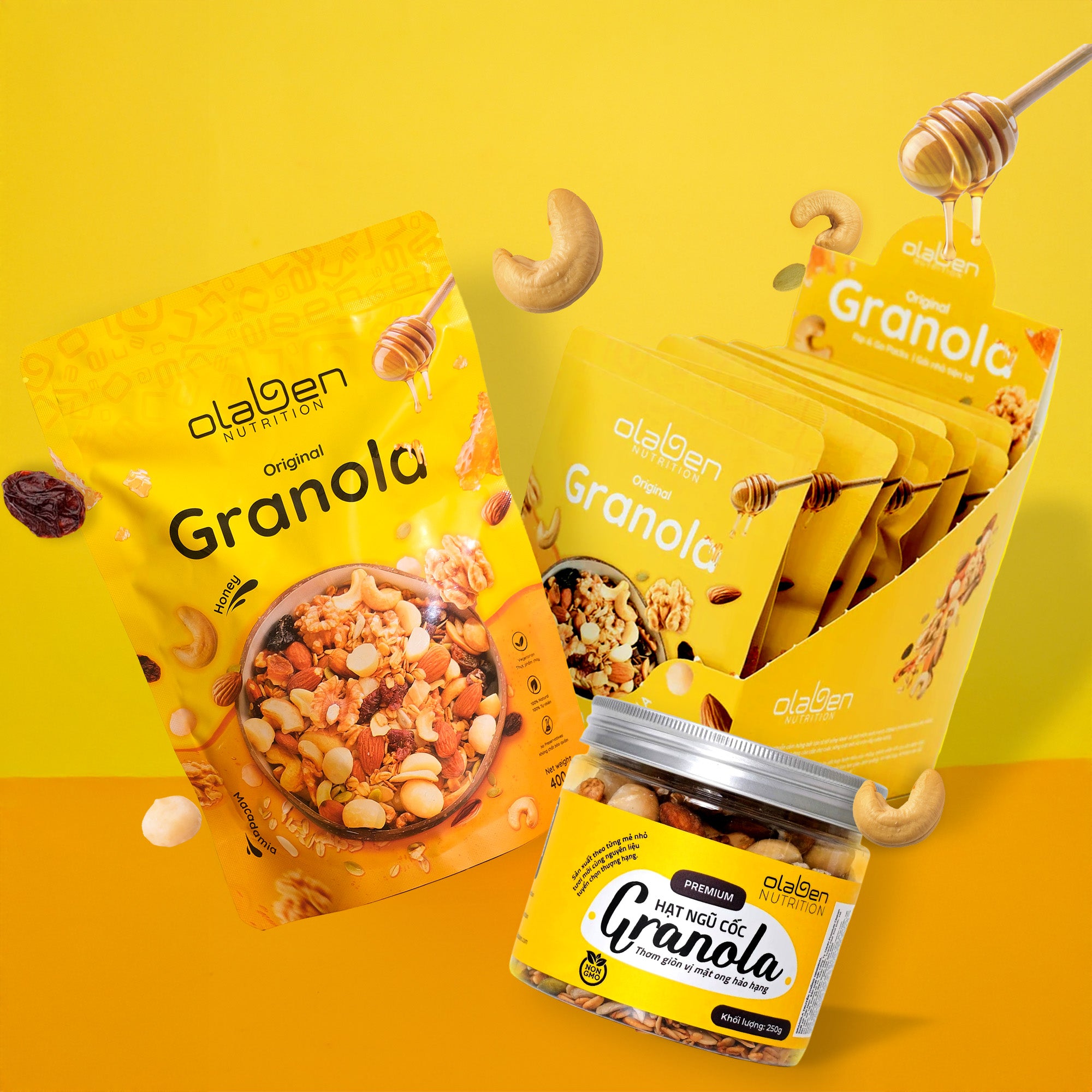
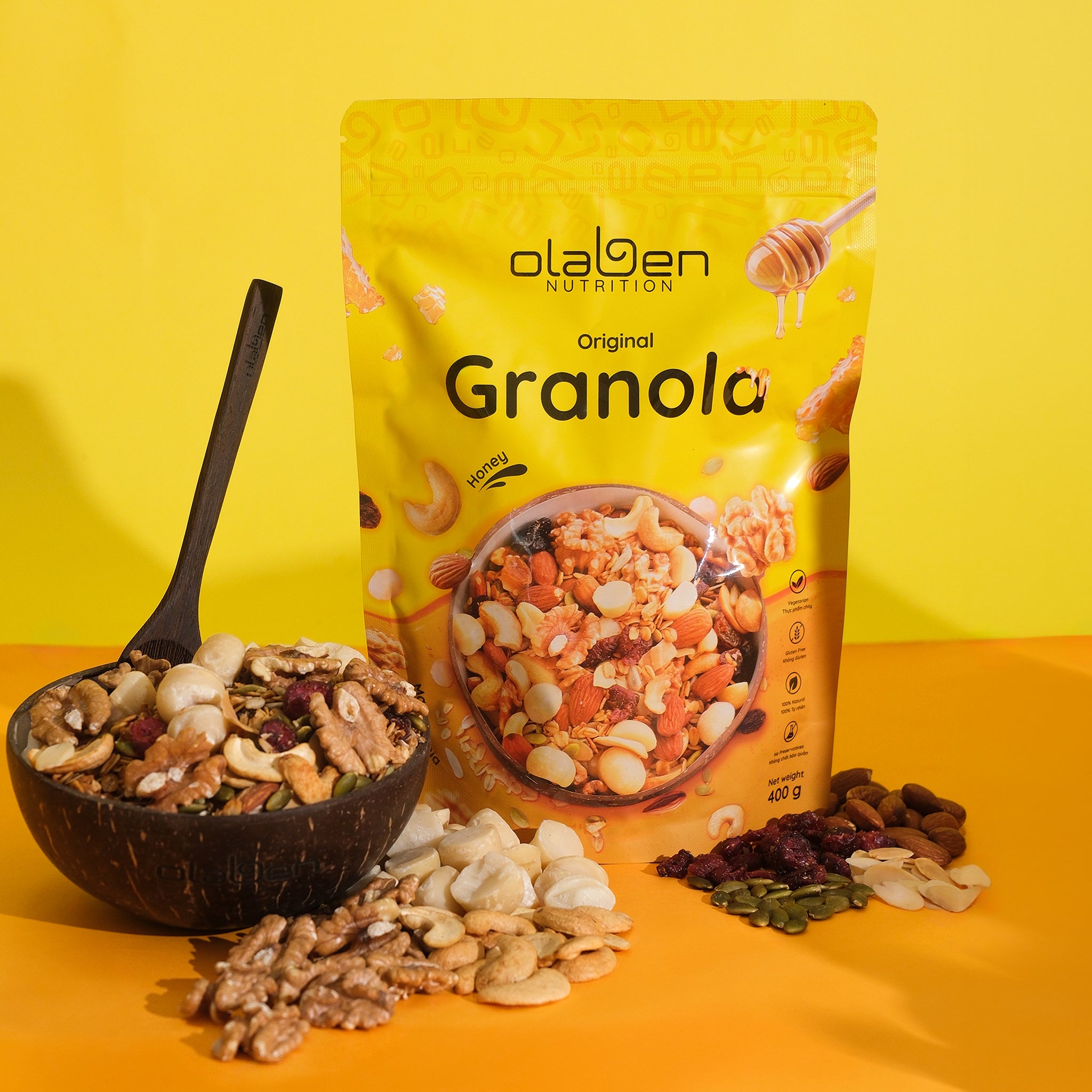
 Image generated with AI — may not represent the actual product.
In short
That is a strange thing for a granola company to publish. We think it is the only honest way to answer the question, so here is the whole thing with the numbers attached.
The Olaben Kitchen shares recipes and food inspiration only. This is not medical or nutritional advice. If you have a health condition, allergies or specific dietary needs, please consult a qualified professional.
Short answer: granola is a genuinely good food that is routinely eaten in a portion that undoes most of the good. And by the US Food and Drug Administration’s actual, legal definition of the word “healthy,” most granola on the shelf does not qualify, including some of ours.
That is a strange thing for a granola company to publish. We think it is the only honest way to answer the question, so here is the whole thing with the numbers attached.
The nutrition, per 100g
USDA FoodData Central lists granola at 489 calories per 100g: 13.7g protein, 24.3g fat, 53.9g carbohydrate, 19.8g total sugars, 8.9g fibre.
That makes granola the most calorie-dense mainstream breakfast cereal by a clear margin.
|
Cereal (per 100g) |
Calories |
|
Granola |
~489 |
|
Oatmeal (dry oats) |
~378 |
|
Corn flakes |
~357 |
|
Muesli |
~351 |
The reason is not the oats. It is the two things done to the oats: baked in oil, bound with sweetener. That is what turns loose muesli into crunchy granola, and it is also what adds roughly 140 calories per 100g over plain oats. The crunch has a cost, and the cost is real.

The portion is the actual problem
Here is where granola gets a reputation it half deserves.
Pack serving sizes are chaos. Healthline documented them ranging from 2 tablespoons (12.5g) to two-thirds of a cup (67g), a fivefold spread, with no standard. So the calorie number on the front of the box is quoting you a portion the manufacturer chose to make the number look good.
A third of a cup of granola looks tiny in a cereal bowl. Almost nobody pours a third of a cup. Pour what looks like a normal bowl, around 60g, add yogurt and fruit, and a mid-sugar granola can deliver about 14g of added sugar before the yogurt, which is 56% of a woman’s entire daily added-sugar allowance under American Heart Association guidance (25g for women, 36g for men).
The granola did not lie to you. The bowl did. This is why we wrote how to read a nutrition label: the trick is always to check per 100g, not per serving, because the serving is negotiable and 100g is not.
The sugar range is enormous
Consumer Reports tested 22 granolas in 2025 and found, per one-third-cup serving:
- Added sugar: 0 to 11g
- Saturated fat: 0 to 10.5g
- Calories: 110 to 210
Same category, same serving size, and one product has eleven times the added sugar of another. This is the single most important fact about granola: the word tells you almost nothing. Two bags side by side can be a reasonable breakfast and a dessert wearing the same name.
Consumer Reports’ own “good for you” threshold is 5g or less added sugar and 4g or less saturated fat per serving. Cleveland Clinic’s dietitian puts the sugar line at under 5g, under 3g being excellent. Those are the numbers to shop against.

The FDA test most granola quietly fails
In December 2024 the FDA finalised a new rule for what a food must contain to legally print the word “healthy” on the label. Compliance is required by February 2028. Brands can use it voluntarily now.
To call a grain food “healthy,” it must contain at least three-quarters of an ounce-equivalent of whole grain and stay under all three of these caps per serving:
- Added sugars: 10% of the Daily Value, roughly 5g
- Sodium: 10% DV, roughly 230mg
- Saturated fat: 5% DV, roughly 1g
Most granola fails, and here is the part nobody expects: the saturated fat cap is usually what kills it, not the sugar. Coconut oil and chocolate chips blow past 1g of saturated fat almost instantly, and Consumer Reports found granolas as high as 10.5g. A granola can be low in sugar and still not be “healthy” by the FDA’s definition, purely on the oil.
We will say the uncomfortable part plainly: several of our own granolas do not clear that bar either, mostly on saturated fat. By 2028 every granola brand will have to reckon with this rule. We would rather tell you now than have you find out from a label change.
What the evidence actually says
Most “granola benefits” you read are borrowed. They are really oat studies, nut studies, or fibre studies, and the benefit gets quietly reassigned to granola. That inference is not wrong, exactly, but it is not evidence about granola.
There is essentially one decent granola-specific trial. Connolly and colleagues, published in Frontiers in Microbiology in 2016, gave 30 people at cardiometabolic risk 45g per day of a whole-grain oat granola for six weeks. Total cholesterol came down 0.94 mmol/L, LDL by 0.4, and beneficial gut bacteria rose.
Now the honest footnotes, because they matter. It was 30 people. It was part-funded by a cereal manufacturer, though they did not run the analysis. It tested one specific whole-grain oat granola at a controlled 45g dose, not chocolate-coconut granola at 80g. And the benefit reversed once people stopped eating it. That study does not license the sentence “granola lowers your cholesterol,” and we are not going to write it.
So, who is granola actually good for?
It is a good breakfast base if you treat it as a topping rather than a bowl, and if the label is clean. It genuinely delivers fibre and, from the nuts and seeds, some protein and healthy fat. Paired with protein it holds you well.
It is a poor choice if you are pouring big bowls of a high-sugar brand and calling it diet food. If weight loss is the specific goal, muesli is the lighter base, calorie for calorie, because it is not baked in oil. We laid out the full comparison in granola vs muesli, and yes, that article sometimes points people toward the product we do not sell. That is the point.
For choosing a good bag, what is actually in good granola is the label-reading guide. For the weight question specifically, we go deeper in is granola good for weight loss.

How to eat it so it stays a good food
- 40 to 50g, not a bowl. About a small handful. Weigh it once so you know what it looks like; you will be surprised how small it is.
- Always with protein. Greek yogurt, cottage cheese, milk. It slows everything down. The balanced breakfast formula explains why.
- Read per 100g. Under about 15g sugar per 100g is a reasonable line. Check saturated fat too, not just sugar.
- As a topping, not the meal. Over yogurt and fruit, not poured like cereal.
Our own range sits at the granola collection, including a no-grain option. Read our labels the same sceptical way you would read anyone’s.
FAQ
Is it OK to eat granola every day?
Yes, at 40 to 50g of a low-sugar granola, with protein. The daily habit is fine; the portion is what needs watching.
Does granola make you gain weight?
Only the way any calorie-dense food does: by eating more of it than you think. At a measured 40g portion it is a reasonable breakfast. Poured freely it is easy to overeat.
Is granola good for diabetics?
It depends heavily on the brand’s sugar and on portion. A low-added-sugar granola with high fibre, in a small portion with protein, is a very different thing from a chocolate granola. Worth discussing with your own clinician.
Is granola healthier than regular cereal?
Usually more fibre and protein, but also more calories and often more sugar than a plain cereal. “Healthier” depends entirely on which granola and which cereal.
Why is granola so high in calories?
Oats baked in oil and bound with sweetener, plus nuts. Every component is energy-dense on purpose.
This article is general information, not medical or dietary advice. Nutrition figures are typical values and vary by product; check the label on what you buy.
More from the kitchen
 Plant-Based Eating: Protein and the Nutrients to WatchYou can get enough protein on a plant-based diet, and the complete-protein rule is…
 What to Eat with Diarrhea: Gentle Foods and What to AvoidHydration matters more than any food, then gentle, low-fibre foods while you recover. What…
 Green Tea: Real Benefits, Caffeine, and the Weight-Loss TruthGreen tea is a genuinely good drink with one heavily oversold claim. The antioxidants,…