
Eating Granola Before Bed: What Holds Up and What Doesn’t
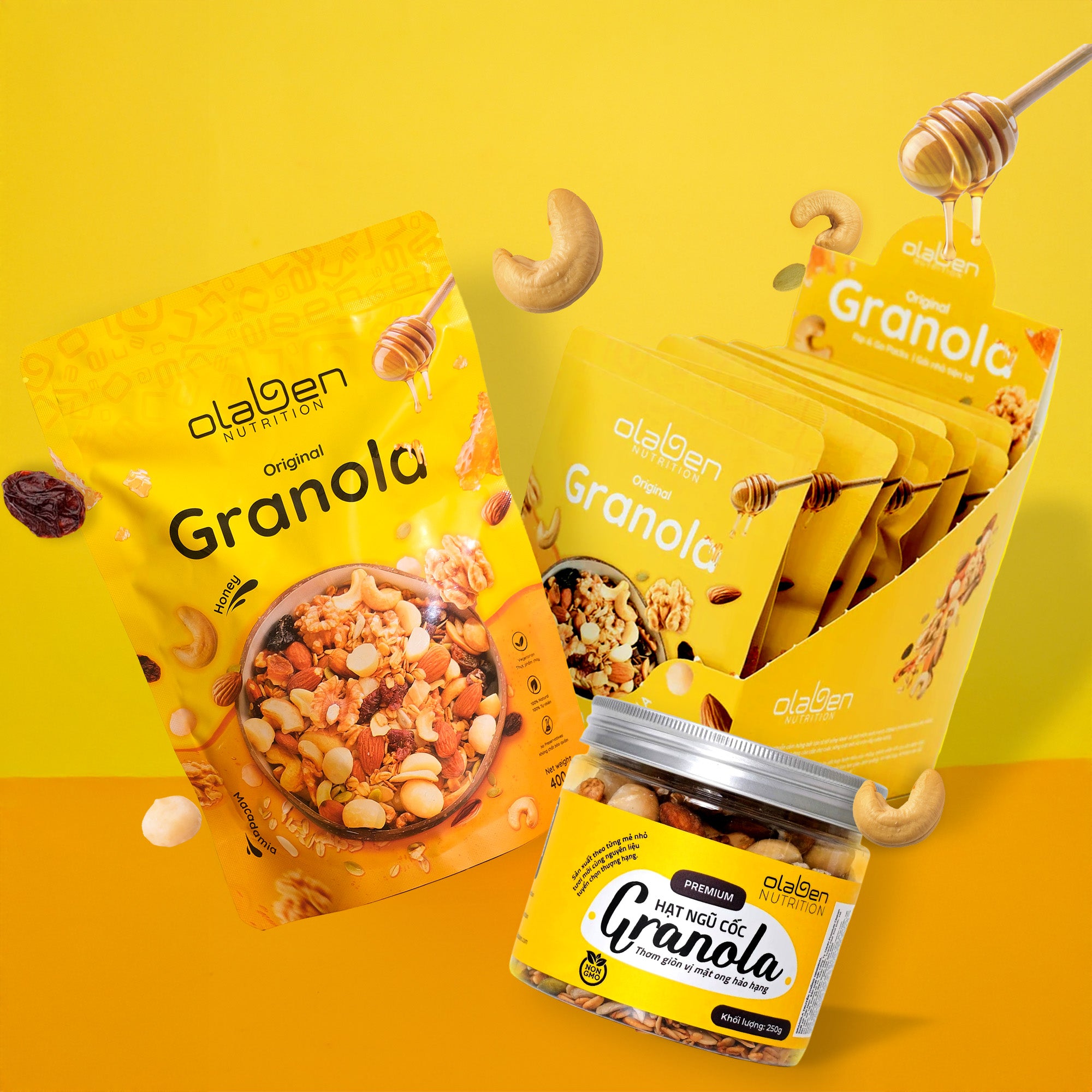
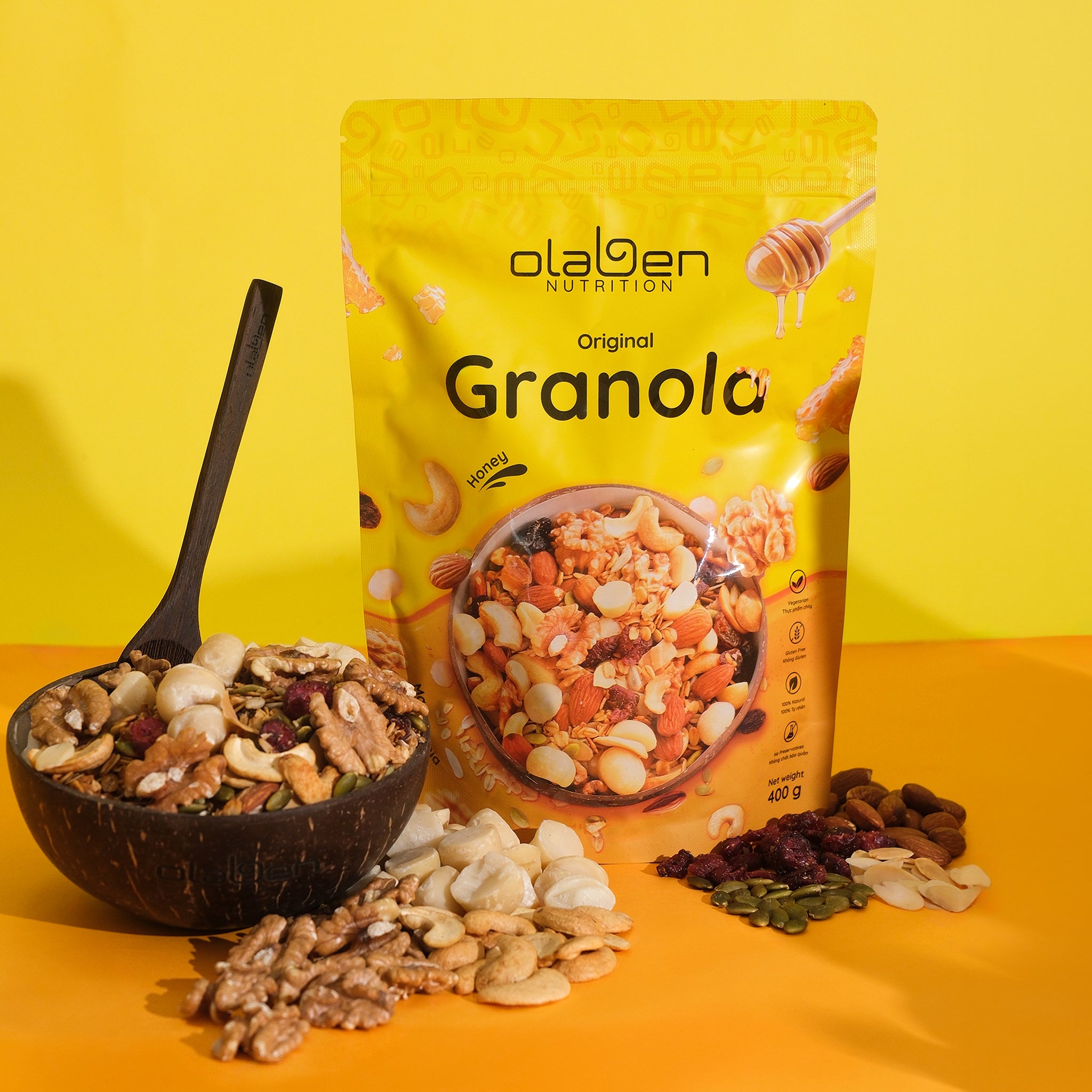
 Image generated with AI — may not represent the actual product.
In short
Search this question and you get flatly contradictory answers. One site tells you granola before bed is a mistake to avoid. Another tells you it is the key to better sleep. Neither cites much of anything.
The Olaben Kitchen shares recipes and food inspiration only. This is not medical or nutritional advice. If you have a health condition, allergies or specific dietary needs, please consult a qualified professional.
Search this question and you get flatly contradictory answers. One site tells you granola before bed is a mistake to avoid. Another tells you it is the key to better sleep. Neither cites much of anything.
Here is what actually holds up.
Two popular claims that do not survive scrutiny
“Granola before bed aids muscle recovery and growth.” This gets repeated widely, and it is a misapplication of real research. The pre-sleep nutrition literature that supports overnight muscle recovery uses roughly 40g of casein protein. Granola is carbohydrate-dominant: a typical 40g serving delivers about 4 to 5g of protein. It is the wrong food for the mechanism being cited. If overnight recovery is genuinely your goal, you want a protein source, and granola is at best the thing sitting next to it.
“Granola with milk before bed helps you sleep.” The usual reasoning is calcium, magnesium and tryptophan. The mechanism is not absurd, but no trial has tested granola and sleep. The magnesium-and-sleep study people lean on tested supplementation in 46 older adults, not food. Treat this as folk belief, not evidence.
We sell granola, and we are telling you these two claims are not supported. They are the two most common reasons given for eating it at night, and both are borrowed from research about other foods.

What the late-eating research does show
This is where there is real evidence, and it cuts the other way.
Vujović and colleagues, publishing in Cell Metabolism in 2022, ran a randomised crossover with 16 adults eating identical meals shifted about four hours later. Late eating increased hunger, raised the ghrelin-to-leptin ratio, lowered waking energy expenditure, and shifted fat-tissue gene expression toward fat storage and away from fat breakdown.
A randomised trial by Madjd and colleagues in the British Journal of Nutrition in 2021 found women who finished eating by 7:30pm lost 6.8kg versus 4.9kg for those eating until 11pm, despite identical calorie intake and physical activity.
Now the honest counterweight, because it matters. The Vujović study had 16 people in tightly controlled lab conditions and did not measure weight change. And the study that did hold calories constant while measuring weight over four weeks, Ruddick-Collins in Cell Metabolism, found morning-loaded and evening-loaded eating produced essentially identical weight loss (3.33kg versus 3.38kg).
Put together, the fair reading is this: late eating is associated with weight gain mostly because of what and how much people eat late, not because the clock itself is metabolically decisive. A measured 40g bowl at 9pm is not the problem. A large bowl with honey and condensed milk at 11pm is a different question, and it is a question about the portion.
The blood sugar point
Granola eaten alone is a carbohydrate load, and that is truer at night when you are about to be still for eight hours.
The fix is the same one that applies at every other hour: pair it with protein. A 2024 meta-analysis in the Journal of Nutrition, covering 154 trial comparisons, found adding protein to a carbohydrate meal reduced the post-meal glucose rise by roughly 50% in people without diabetes. Granola with unsweetened Greek yogurt behaves very differently from granola with milk and honey.
How to have a bedtime bowl sensibly
- Keep it to 40g. That is roughly 195 to 245 calories depending on the product. Weigh it once; it looks smaller than you expect.
- Always with protein. Unsweetened Greek yogurt is the best partner. Around 150g of it adds roughly 90 calories and meaningful protein, landing the whole thing near 300 to 350 calories, which is a light supper rather than a second dinner.
- Finish about two hours before you lie down. This is partly the late-eating evidence and partly comfort: lying down soon after eating is a reflux risk.
- Pick a low-sugar granola. Check per 100g, not per serving. Under roughly 15g sugar per 100g is a sensible line. Our guide to what is actually in good granola covers the label specifics.
- Skip the sweet additions at night. Honey, condensed milk, sweetened dried fruit and chocolate granola are where the evening bowl quietly turns into dessert.

When granola at night is a genuinely good idea
- You skipped or under-ate dinner and are actually hungry. A light, balanced supper beats going to bed hungry and beats a much worse midnight snack.
- You trained in the evening and want carbohydrate to help replenish glycogen. Pair it with a protein source; the timing detail is covered in the best time to eat granola.
- It is replacing something worse. If the realistic alternative is crisps or ice cream, a small granola-and-yogurt bowl is a clear improvement.
When to skip it
- You already ate a full dinner and are eating out of habit rather than hunger.
- It is right before you get into bed.
- The granola in your cupboard is a high-sugar one, and there is no lower-sugar option in the house.
- You have reflux that is triggered by eating late.

FAQ
Does eating granola before bed make you gain weight?
Not by itself. Total daily intake is the dominant factor. A measured 40g portion with yogurt is a reasonable light supper; a large bowl on top of a full dinner is surplus calories, at any hour.
Does granola help you sleep?
There is no evidence for it specifically. No trial has tested granola and sleep. The claim is borrowed from magnesium supplementation research in older adults.
Is granola good for muscle recovery overnight?
Not really. That research uses about 40g of casein protein. Granola gives you around 4 to 5g of protein per serving. Pair it with a protein source if recovery is the aim.
How long before bed should I eat it?
About two hours. That covers both the late-eating evidence and the practical comfort of not lying down on a full stomach.
Can granola replace dinner?
As a light supper with protein and fruit, occasionally, yes. As a routine dinner replacement, no: it is low in protein and contains no vegetables.
General information, not medical advice. Nutrition values vary by product; check your label.
More from the kitchen
 Plant-Based Eating: Protein and the Nutrients to WatchYou can get enough protein on a plant-based diet, and the complete-protein rule is…
 What to Eat with Diarrhea: Gentle Foods and What to AvoidHydration matters more than any food, then gentle, low-fibre foods while you recover. What…
 Green Tea: Real Benefits, Caffeine, and the Weight-Loss TruthGreen tea is a genuinely good drink with one heavily oversold claim. The antioxidants,…