
Weight-Loss Smoothies: How to Make One That Fills You Up
 Image generated with AI — may not represent the actual product.
In short
Most smoothies are fruit sugar in a glass. How to build one with protein and fibre so it works as a meal, plus 4 recipes and the common traps.
The Olaben Kitchen shares recipes and food inspiration only. This is not medical or nutritional advice. If you have a health condition, allergies or specific dietary needs, please consult a qualified professional.
Smoothies have a health halo they only partly deserve. A typical fruit smoothie is several pieces of fruit, juice and perhaps honey, blended into a drink you finish in two minutes. That is a lot of sugar, very little protein, and it rarely keeps you full until lunch. A smoothie can help with weight loss, but only if it is built like a meal. Here is how.
Why most smoothies do not help
Two problems:
- Liquid calories are easy to overdo. Drinking is faster than chewing, and liquids fill you up less than the same calories as solid food.
- Fruit-only smoothies are mostly sugar. Without protein or fat, the sugar hits fast and hunger returns quickly.
So the fix is not to avoid smoothies; it is to change what goes in.

The formula
Build every smoothie from these parts:
|
Part |
Examples |
Why |
|
Protein |
Greek yogurt, milk, silken tofu, protein powder |
Keeps you full |
|
Fibre |
Oats, chia, flax, vegetables (spinach) |
Slows digestion |
|
Fruit, one portion |
Half a banana, a handful of berries |
Flavour and sweetness |
|
Liquid |
Water, unsweetened milk or nut milk |
Blends it |
|
Optional fat |
A spoon of nut butter, a few nuts |
Staying power |
The two big changes from a usual smoothie: one portion of fruit, not three, and always a protein.
4 recipes
1. Berry and oat. 150g Greek yogurt, a handful of berries, 2 tablespoons oats, 1 tablespoon chia, water or unsweetened milk.
2. Green. A handful of spinach, half a banana, 150g Greek yogurt, 1 tablespoon nut butter, water. Spinach adds fibre with almost no taste.
3. Chocolate peanut. Unsweetened milk, half a frozen banana, 1 tablespoon cocoa, 1 tablespoon peanut butter, 2 tablespoons oats.
4. Mango and coconut. A small handful of mango, 150g Greek yogurt, unsweetened coconut milk, 1 tablespoon chia.
Each lands around 300 to 350 calories with real protein, which makes it a breakfast, not a snack.

The common traps
- Juice as the base. Fruit juice adds sugar without fibre. Use water or unsweetened milk.
- Honey, syrup or condensed milk. Ripe fruit is sweet enough.
- Café and bottled smoothies. Often large and heavily sweetened. Check the size and sugar.
- Too much granola on top. A spoon for crunch is fine; a large pour adds calories fast. For a thick, spoonable version, see how to build a smoothie bowl.
Tips
- Use frozen fruit for a thick, cold smoothie without ice watering it down.
- Soak chia first, or blend it in well; never take spoonfuls of dry chia with a drink, as noted in chia seeds.
- Drink it slowly, or eat it from a bowl with a spoon. Slower eating helps you feel full.
- Treat it as a meal, not an extra on top of breakfast.
A smoothie is one tool in a wider plan. The bigger picture is in the 7-day weight-loss meal plan.
FAQ
Are smoothies good for weight loss?
They can be, if they include protein and fibre and replace a meal. Fruit-only smoothies are mostly sugar and do not keep you full.
How do I make a smoothie more filling?
Add a protein (Greek yogurt, milk, tofu), a fibre source (oats, chia, spinach), and limit fruit to one portion.
How many calories should a weight-loss smoothie have?
Around 300 to 350 calories if it replaces a meal. Much more and it stops being a light option.
Can I drink a smoothie every day?
Yes, if it is built well and replaces a meal rather than being added on top.
Is a smoothie better than eating fruit?
Whole fruit is more filling because you chew it. A smoothie works best when it adds protein and fibre that fruit alone does not have.
General information, not medical advice.
More from the kitchen
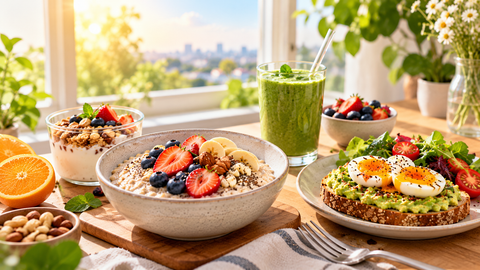 Breakfast for Diabetes: 7 Ideas That Keep Blood Sugar SteadierSeven practical breakfasts built around protein, fibre and slower carbs, plus the breakfast traps…
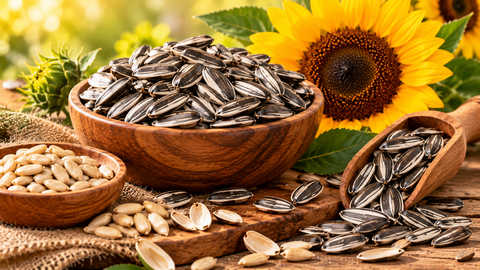 Sunflower Seeds: Benefits, Calories, and the Salt ProblemSunflower seeds are one of the richest food sources of vitamin E. The real…
 Pistachios: Benefits, Calories, and the In-Shell TrickPistachios give you the most nuts per calorie of any common nut, and shelling…