
Sunflower Seeds: Benefits, Calories, and the Salt Problem
 Image generated with AI — may not represent the actual product.
In short
Sunflower seeds are one of the richest food sources of vitamin E. The real numbers, the benefits, and why the salted in-shell kind needs watching.
The Olaben Kitchen shares recipes and food inspiration only. This is not medical or nutritional advice. If you have a health condition, allergies or specific dietary needs, please consult a qualified professional.
Sunflower seeds are a staple snack in Vietnam, especially at Tet, when a bowl of them sits on almost every table. They are genuinely nutritious, and one of the best food sources of vitamin E. The catch is in how they are usually sold: roasted in the shell with a lot of salt. Here is the full picture.
The numbers
Per 28g of kernels (shelled): roughly 165 calories, 5.5g protein, 2.4g fibre, 14g fat, mostly unsaturated.
The standout is vitamin E. A 28g serving covers close to half of the daily need, more than almost any other common food. Sunflower seeds also provide selenium, magnesium and B vitamins.
What they are good for
Vitamin E. An antioxidant that helps protect cells. Sunflower seeds and almonds are the two easiest ways to get it from food.
Healthy fat and plant protein. Like pumpkin seeds, they add filling protein and unsaturated fat to a snack or a meal.
Selenium and magnesium. Two minerals many diets fall short on.

The salt problem
This is the part that matters for how most people eat them. The roasted, in-shell sunflower seeds sold for Tet are usually heavily salted, and the salt sits on the shell, so you take it in every time you crack one with your teeth. Over an afternoon of snacking that adds up to a lot of sodium.
Three simple fixes: - Choose unsalted or lightly salted packs, and check sodium on the label. - Buy shelled kernels for everyday use; they are easier to portion and add to food. - Portion them out rather than eating from a large bowl, which is where the hours of grazing happen.
How to eat them
- Portion: about 28g of kernels, roughly 165 calories.
- Add to food: scatter on salads, stir into oat porridge or yogurt, or add to a trail mix.
- Storage: the oils in sunflower seeds turn rancid if left warm and open. Keep them airtight and cool.

Who should take care
- Anyone watching salt or blood pressure: choose unsalted.
- Kidney patients on restricted diets should check with their doctor, as seeds contribute phosphorus and potassium.
- Seed allergy: rare, but avoid if you react.
FAQ
How many calories in sunflower seeds?
About 165 per 28g of kernels (shelled).
Are sunflower seeds good for you?
Yes. They are one of the best food sources of vitamin E and provide protein, healthy fat, selenium and magnesium. Salt is the main thing to watch.
How many sunflower seeds should I eat a day?
About 28g of kernels. Portioning them out helps, since it is easy to snack on them for hours.
Are salted sunflower seeds bad?
Not in small amounts, but the in-shell salted kind can deliver a lot of sodium over a long snacking session. Choose unsalted when you can.
Shelled or in-shell sunflower seeds?
In-shell slows you down but is usually saltier. Shelled kernels are easier to portion and add to food.
General information, not medical advice. Values are typical and vary by product.
More from the kitchen
 GuidesWeight-Loss Smoothies: How to Make One That Fills You UpMost smoothies are fruit sugar in a glass. How to build one with protein…
 Breakfast for Diabetes: 7 Ideas That Keep Blood Sugar SteadierSeven practical breakfasts built around protein, fibre and slower carbs, plus the breakfast traps…
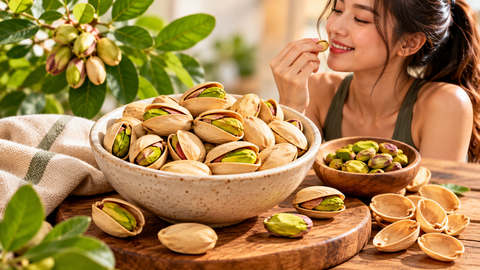 Pistachios: Benefits, Calories, and the In-Shell TrickPistachios give you the most nuts per calorie of any common nut, and shelling…