

Granola vs muesli: what’s the difference and which is better?
Granola and muesli sit next to each other on the breakfast shelf, both built on oats, nuts and dried fruit. They look similar in the bag, yet they are made very differently and they behave very differently in your bowl. If you have ever wondered which one is the smarter pick, this guide breaks down the real difference and helps you choose with confidence.
What is granola

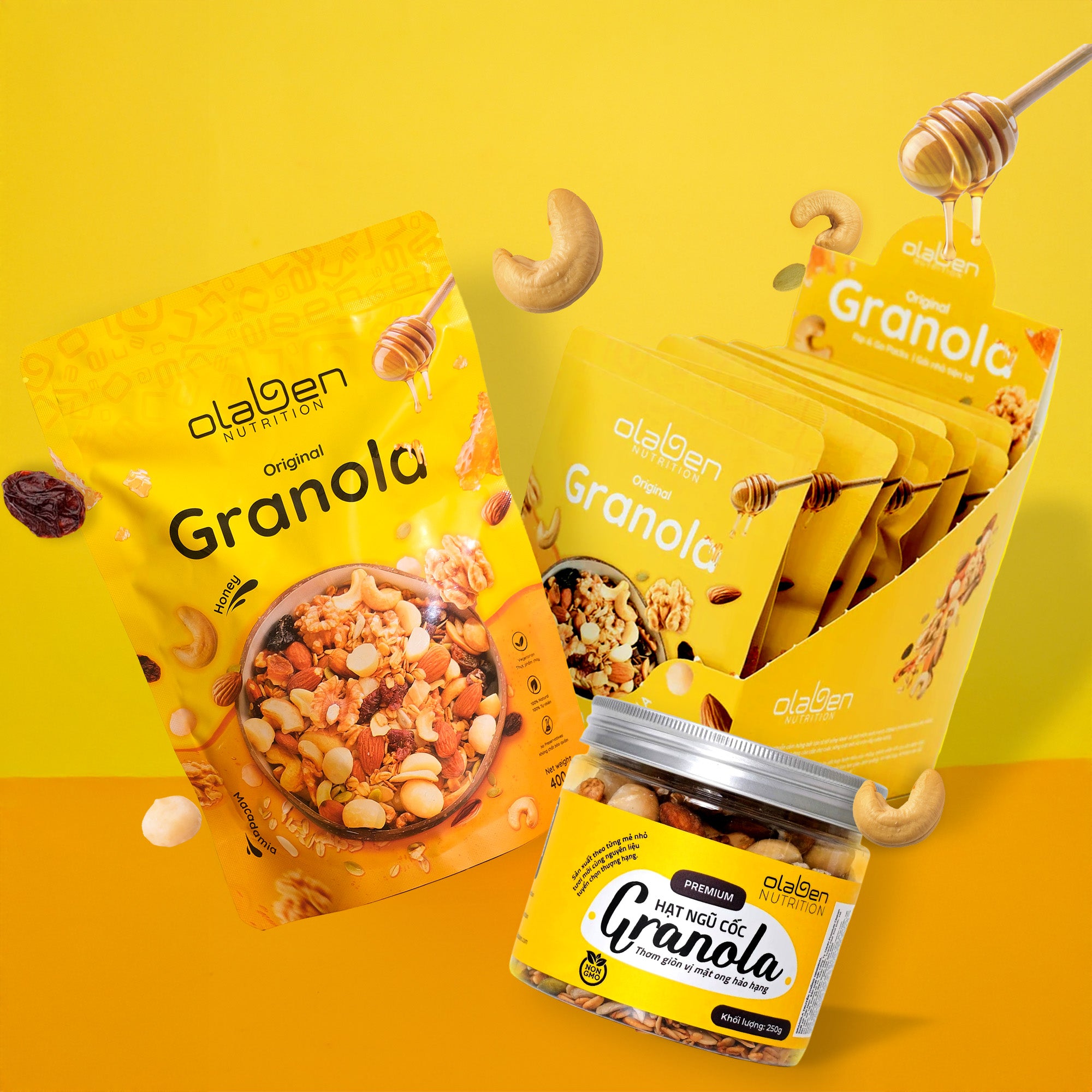
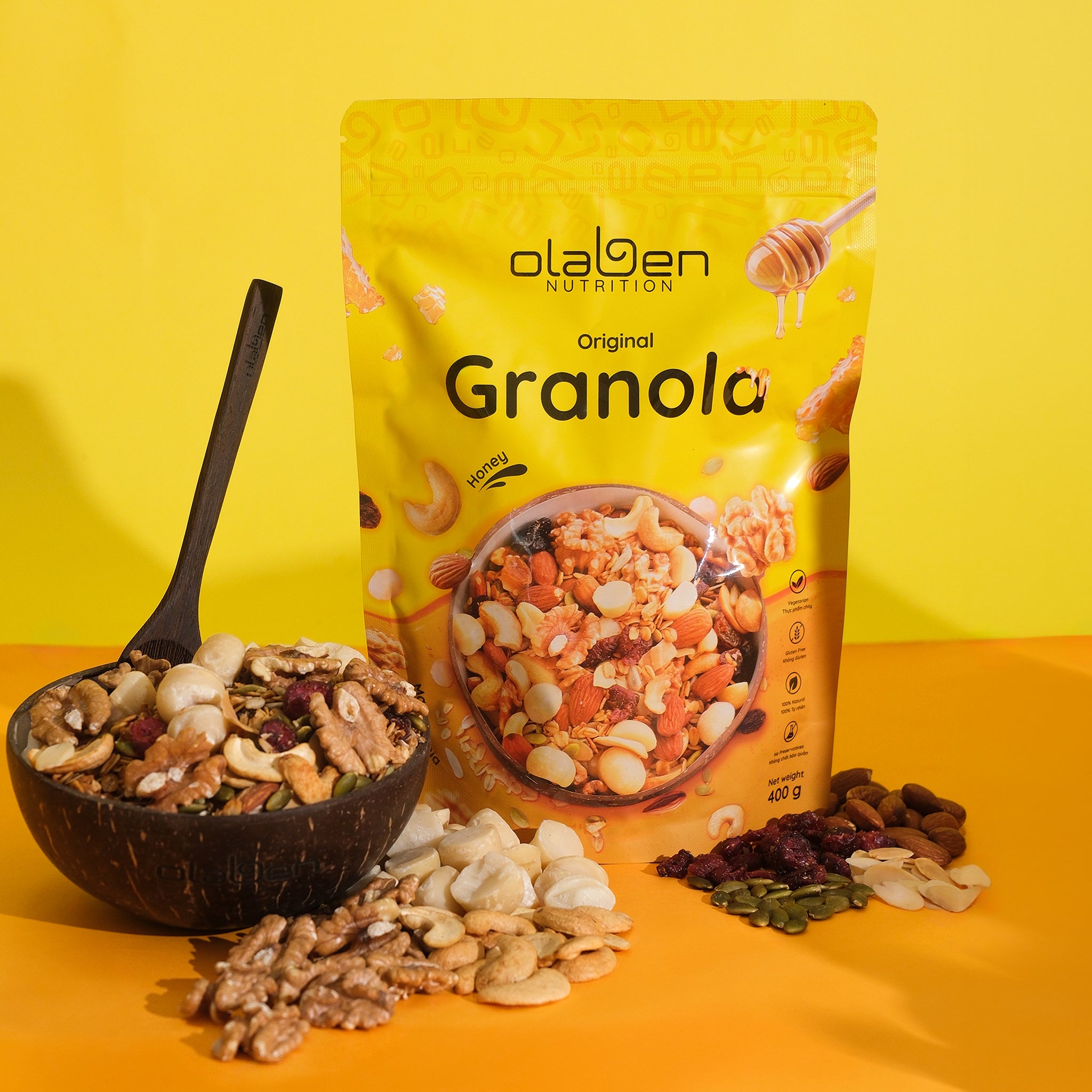
Granola is a baked breakfast cereal. The oats, nuts and seeds are tossed with a liquid sweetener and a fat, usually honey, maple syrup or coconut oil, then spread out and baked until golden. That baking step is what creates the signature crunch and those toasted clusters everyone loves.
Because of the oil and sweetener, granola is energy dense and ready to eat straight from the bag. It works as a cereal with milk, a yogurt topping, or a snack by the handful. Want to know what separates a clean batch from a sugary one? See what is in good granola.
What is muesli
Muesli is the raw, uncooked cousin. It is simply a mix of rolled oats, nuts, seeds and dried fruit with nothing baked, no added oil and usually no added sweetener. The blend stays loose and powdery rather than clustered.
Because it is raw, muesli is more flexible. You can eat it cold with milk, but the classic Swiss method is to soak it overnight in milk, yogurt or juice so the oats soften. Soaking turns it into something closer to overnight oats, gentler on the stomach and easier to digest.
The key differences

The two cereals diverge most clearly on cooking and added ingredients. Here is the side by side view.
|
Feature |
Granola |
Muesli |
|
Ingredients |
Oats, nuts, seeds plus oil and sweetener |
Oats, nuts, seeds, dried fruit, no oil or sweetener |
|
Cooking |
Baked until crunchy |
Raw and uncooked |
|
Added sugar |
Usually moderate to high |
Often none, naturally low |
|
Calories |
Higher, around 450 to 500 per 100g |
Lower, around 350 to 380 per 100g |
|
Texture |
Crunchy clusters |
Loose and soft, especially soaked |
|
Best for |
Quick energy, toppings, snacking |
Lighter breakfasts, soaking, calorie control |
The oats themselves matter too. Rolled oats soak well while steel cut stay chewy, which is why most muesli uses rolled. For the full picture, read our oats explained guide.
Which has more sugar and calories
Granola almost always carries more of both. The sweetener that binds the clusters adds sugar, and the oil used for baking pushes calories up. A typical serving of granola can deliver as much sugar as a few cookies if the brand is heavy handed.
Muesli usually has no added sugar at all. Its only sweetness comes from the dried fruit, so the sugar is paired with fibre rather than poured on. Calorie for calorie, muesli is the lighter choice.
That said, not all granola is created equal. A well made batch with restrained sweetener and quality oils can be perfectly balanced. The label is your friend, so check the sugar per 100g rather than per serving, since serving sizes are often tiny.
Which is better for weight loss
If your single priority is fewer calories per spoonful, muesli has the edge. It is lower in calories and fat, and soaking it makes the same amount feel more filling.
But weight loss is really about the whole portion, not the cereal name. A controlled portion of granola, around 30 to 40g, sprinkled over yogurt and fruit can keep you full longer thanks to the fat and protein in the nuts. The trap with granola is pouring a giant bowl, since it is dense and easy to overeat.
A simple rule helps:
- Choose muesli if you want volume eating and the lowest calories.
- Choose granola if you want crunch and staying power, and you can keep the portion modest.
- Either way, watch portion size and pick low or no added sugar versions.
Which should you choose
There is no single winner, only the right fit for your morning.
- Busy and grab and go: granola wins, it needs no prep.
- Sensitive stomach or you like soaking overnight: muesli is gentler.
- Topping yogurt or smoothie bowls: granola adds the crunch.
- Strict calorie counting: muesli is the lighter base.
- You want both: layer soaked muesli at the bottom and a spoon of granola on top for texture.
The honest answer is that quality beats category. A clean granola made with whole oats, real nuts and minimal sweetener will out perform a cheap, sugar loaded muesli every time. Read the ingredient list before the marketing.
FAQ
Is muesli healthier than granola?
Often yes, because it usually has no added sugar or oil, so it is lower in calories. But a clean, low sugar granola can be just as healthy. Always compare the labels.
Can I eat muesli without soaking it?
Yes. You can eat it dry with cold milk or yogurt. Soaking simply softens the oats and makes it easier to digest.
Is granola good for weight loss?
It can be, in a controlled portion of around 30 to 40g. The healthy fats keep you full, but the calorie density means large bowls add up quickly.
What is the difference between muesli and oatmeal?
Oatmeal is cooked oats served hot. Muesli is a raw mix of oats with nuts and fruit, eaten cold or soaked.
Ready to upgrade your breakfast bowl? Explore our crunchy, low sugar granola collection and find a blend you will actually look forward to.


