
The Best Time to Eat Oats (Morning, Pre-Workout, or Night)
 Image generated with AI — may not represent the actual product.
In short
As with most foods, the honest headline is that when you eat oats matters far less than how much and what you add.
The Olaben Kitchen shares recipes and food inspiration only. This is not medical or nutritional advice. If you have a health condition, allergies or specific dietary needs, please consult a qualified professional.
As with most foods, the honest headline is that when you eat oats matters far less than how much and what you add. But some times of day suit oats better than others, and there is real evidence behind a couple of them. Here is the practical version.
Morning: the obvious one, for good reasons
Oats at breakfast are the default because they work: the beta-glucan fibre gives a slow, steady release of energy that holds you to lunch, especially with protein alongside. That steady-energy effect is the honest reason, not any “kickstart your metabolism” claim, which is not real. We cover why in what oats do for you.
Ignore any advice about a magic morning window. There is no evidence that oats are absorbed better at 7am than at 10am. Eat them when you are hungry.
Around a workout: where timing actually counts
This is the one context with real sports-nutrition backing, and oats fit because they are carbohydrate-rich.
Before training, a modest portion 30 to 60 minutes ahead gives usable energy for longer sessions. For a session under an hour, it mostly just stops you feeling hungry rather than boosting performance.
After training, the carbohydrate helps replenish glycogen, and pairing oats with a protein source supports recovery. For a normal gym hour eaten into a normal day, the urgency is overstated; total daily intake does most of the work. The same logic applies to granola, covered in the best time to eat granola.
Evening and night: fine, with a caveat
Oats at night are perfectly reasonable as a light supper, and the beta-glucan makes them gentle and filling. Overnight oats are literally made the night before.
The honest caveat is the same as for any evening meal: keep the portion controlled, pair with protein, and do not drown it in honey right before bed. Late eating is linked to weight gain mostly through what and how much people eat late, not the clock itself.

The thing that beats timing: pairing
Whenever you eat oats, the single most useful move is to add protein. Oats alone are a carbohydrate load; oats with yogurt, milk or eggs steady the blood sugar and keep you fuller. That does more than any hour you could choose, and it is the same reasoning in our fibre guide.
Portion matters too. Weigh 40 to 50g dry once, so you know what a real serving looks like. More on that in oat calories.
Quick reference
|
When |
Verdict |
Note |
|
Morning |
Great default |
For energy, not metabolism |
|
30–60 min pre-workout |
Useful for long sessions |
Under an hour, mostly comfort |
|
Post-workout |
Useful with protein |
Total intake matters more |
|
Evening / overnight oats |
Fine |
Control portion, add protein |
FAQ
When is the best time to eat oats?
There is no single best time. Morning suits most people; around workouts is where timing has real backing. Pick what fits your day.
Is it okay to eat oats at night?
Yes, as a light, protein-paired supper. Overnight oats are designed for it. Just watch portion and added sugar.
Do oats give you energy in the morning?
Yes, a steady release because of beta-glucan, especially with protein. Not through any metabolism boost.
Should I eat oats before or after exercise?
Either. Before, 30 to 60 minutes out for longer sessions. After, with protein, to help recovery.
Does eating oats at a certain time help weight loss?
No. Total intake and portion drive weight, not the clock. Oats help because they are filling, whenever you eat them.
General information, not medical advice.
More from the kitchen
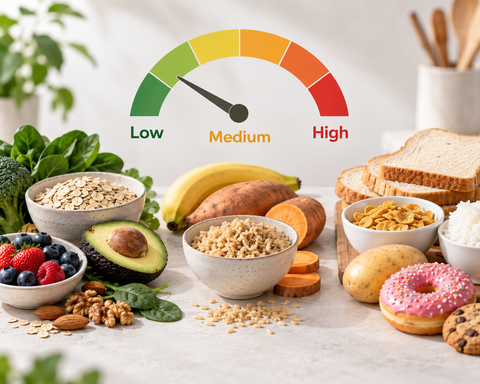 GuidesThe Glycemic Index, Explained Simply (With the Numbers)The glycemic index gets quoted everywhere and understood almost nowhere. It is a genuinely…
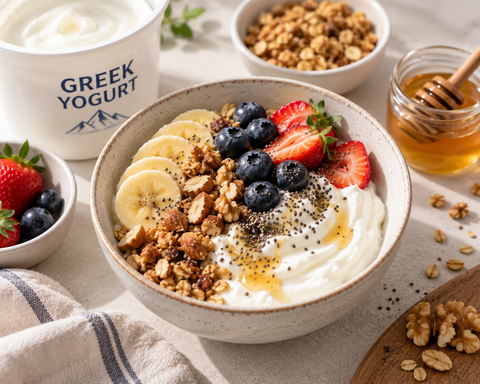 GuidesGreek Yogurt: What It Is, How It Differs, and How to Make ItGreek yogurt has one defining feature, and once you know it, the whole product…
 GuidesWhat “Eat Clean” Actually Means (And Where It Goes Wrong)“Eat clean” is one of those phrases everyone uses and nobody defines the same…