
Healthy Snacks: What Counts, and 12 That Actually Work
 Image generated with AI — may not represent the actual product.
In short
A healthy snack is not about the label on the front. The two things that make a snack fill you up, a calorie range, and 12 real options.
The Olaben Kitchen shares recipes and food inspiration only. This is not medical or nutritional advice. If you have a health condition, allergies or specific dietary needs, please consult a qualified professional.
Snacking has a bad reputation it only half deserves. A snack is not the problem. An unplanned handful of something sweet every time you pass the kitchen is. The fix is not to stop snacking; it is to make the snack do a job, which mostly means keeping you full until the next meal instead of spiking your blood sugar and leaving you hungrier.
Here is what actually makes a snack healthy, and twelve that clear the bar.

The two things that make a snack work
Forget the word “healthy” on the front of the pack. It is a marketing term, not a measurement. What matters is whether the snack keeps you full, and that comes down to two things.
Protein and fibre. These are the two nutrients that slow digestion and blunt the blood sugar rise, so you stay full longer. A snack that is mostly refined carbohydrate or sugar does the opposite: a quick spike, then a crash that leaves you hungrier than before. Aim for a snack with at least 3g of protein or 3g of fibre, ideally both. The reasoning is the same as in our fibre guide.
A sensible size. A snack is a bridge between meals, not a meal. A useful range is around 150 to 250 calories. Below that it may not hold you; well above it and it starts competing with your next meal.
So the test for a good snack is simple: does it have protein or fibre, and is it a sensible size? Most “healthy” snacks that fail are failing on sugar, size, or both, which is why reading the label per 100g matters, as in our nutrition label guide.
12 healthy snacks that clear the bar
|
Snack |
Why it works |
Rough portion |
|
A handful of nuts |
Protein, fibre, healthy fat |
28 to 30g |
|
Greek yogurt with fruit |
High protein, keeps you full |
1 pot + fruit |
|
Granola over yogurt |
Fibre from oats, protein from yogurt |
40g granola |
|
Apple with nut butter |
Fibre plus protein and fat |
1 apple, 1 tbsp |
|
Boiled eggs |
Cheap, high protein |
1 to 2 |
|
Edamame |
High protein and fibre for few calories |
1/2 cup |
|
A brown rice bar |
Whole grain, savoury, portable |
1 bar |
|
Trail mix (unsweetened) |
Protein, fibre, controlled sugar |
small handful |
|
Hummus with vegetables |
Fibre plus plant protein |
2 tbsp + veg |
|
Cottage cheese |
Slow-digesting protein |
1/2 cup |
|
Chia pudding |
Fibre and staying power |
1 small pot |
|
A piece of fruit plus a few nuts |
Fibre plus fat to steady it |
1 fruit + small handful |
Notice the pattern: almost every one pairs a carbohydrate with a protein or fat. That pairing is the whole game. A snack of fruit alone is fine, but fruit plus a few nuts holds you far longer.

The snacks that pretend to be healthy
A few common “healthy” snacks are closer to sweets, and the label often hides it:
- Sweetened dried fruit and fruit “bites”: concentrated sugar, covered in is dried fruit healthy.
- Most cereal bars and “granola” bars: often as much sugar as a biscuit. Check added sugar per bar.
- Flavoured yogurts: can carry more sugar than a dessert. Plain or Greek is the fix.
- Baked veg crisps: often just crisps with a health halo.
None are forbidden. Just call them what they are, and keep them occasional rather than the everyday snack.
Snacking with intention (the honest bit)
The old habit worth keeping is a two-second pause before you eat: am I actually hungry, or bored, tired or stressed? A snack eaten to fix hunger is useful. One eaten on autopilot usually is not, and it is the autopilot handfuls, not the planned snack, that add up. Deciding your snack in advance, and portioning it out rather than eating from the bag, does more for your intake than any single food choice.
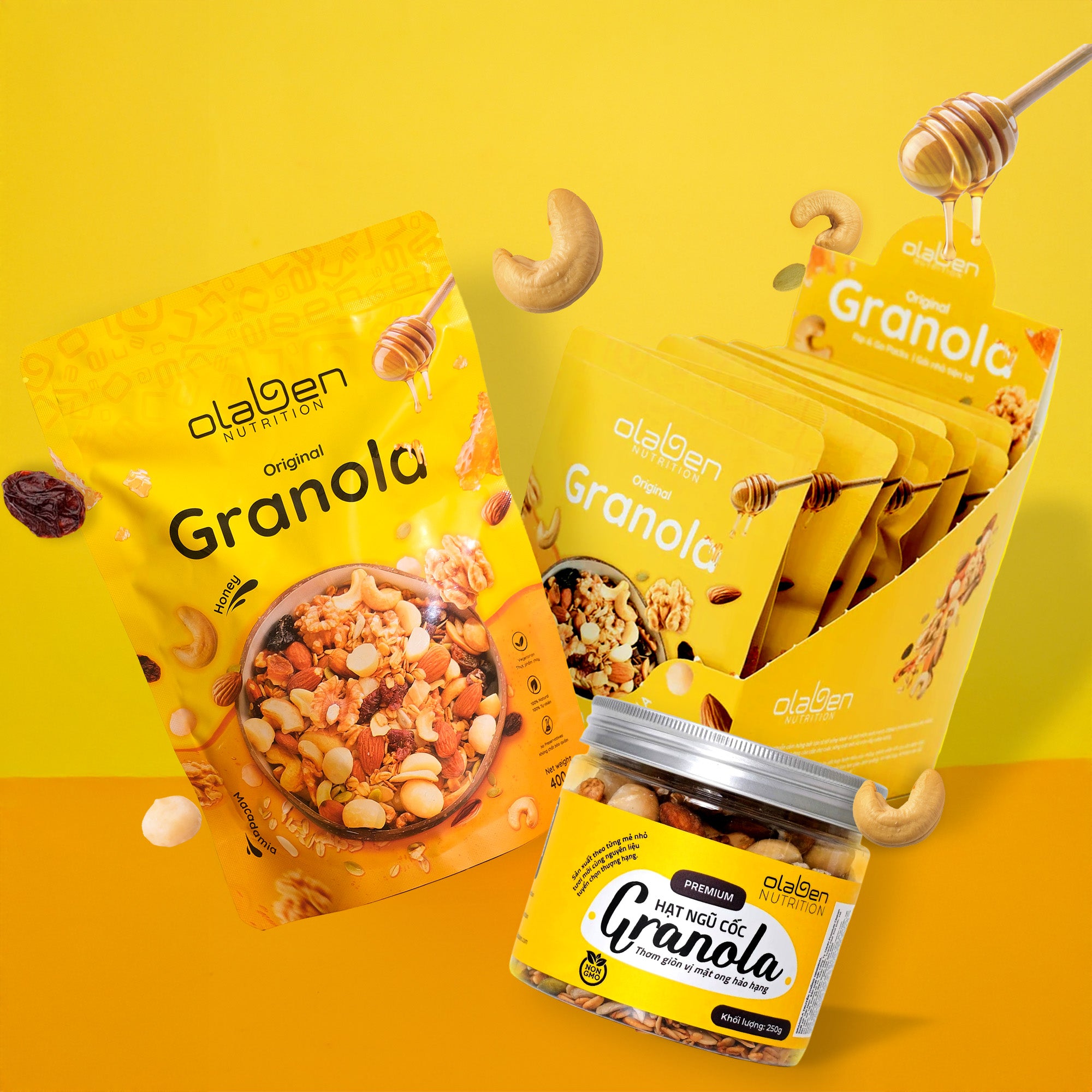
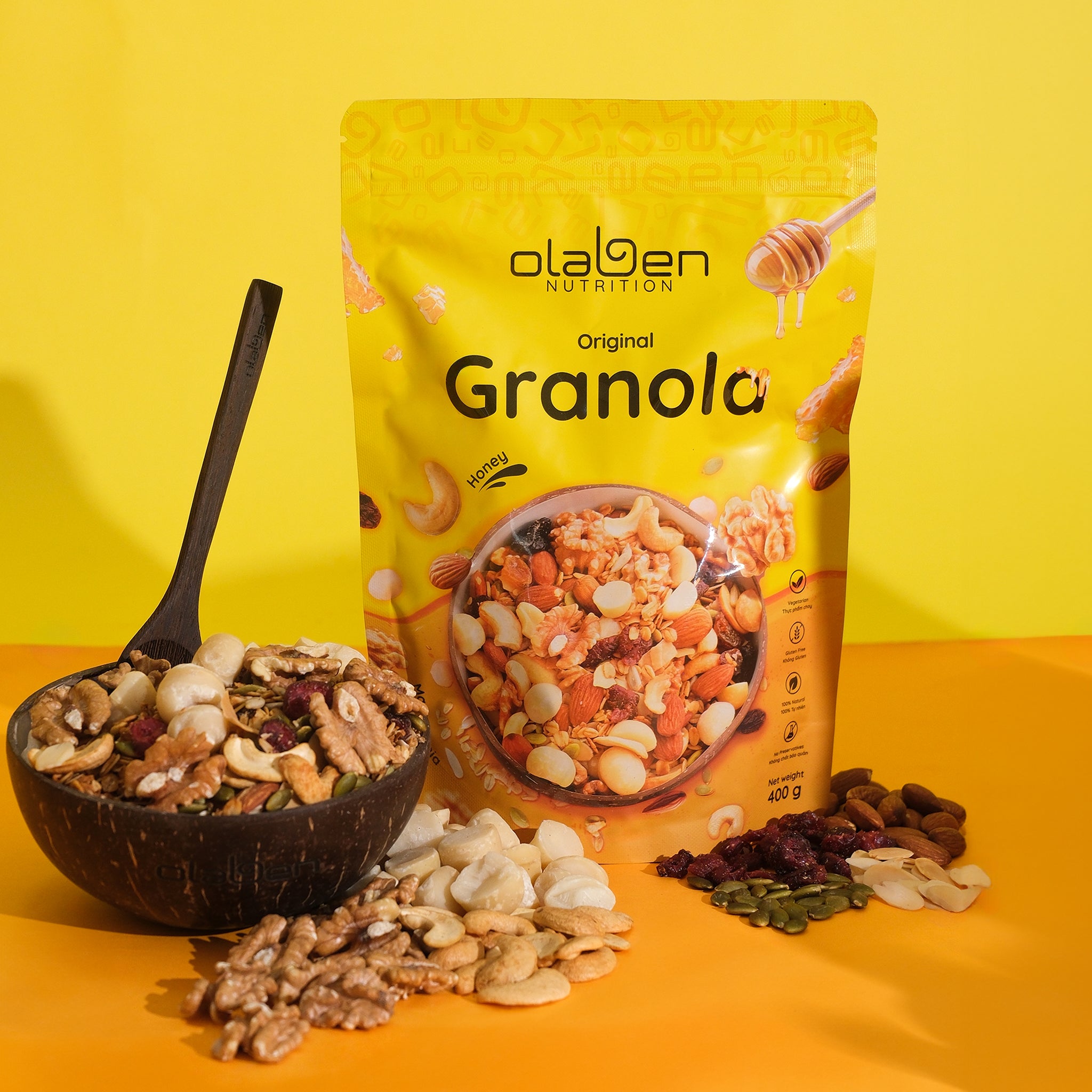
Our own snack range, from nuts to granola and brown rice bars, is built around the protein-and-fibre idea, but the same rule applies to anything: read the label, watch the portion.

FAQ
What makes a snack healthy?
Protein or fibre to keep you full, and a sensible size (roughly 150 to 250 calories). The word “healthy” on the pack is not a guarantee; the label per 100g is.
How many calories should a snack be?
Around 150 to 250 for most people. Enough to bridge to the next meal without competing with it.
What are good high-protein snacks?
Greek yogurt, boiled eggs, edamame, cottage cheese, and nuts. Pairing any carbohydrate with a protein makes it more filling.
Are nuts a healthy snack?
Yes, at a measured portion of about 28 to 30g. They bring protein, fibre and healthy fat, but they are calorie-dense, so watch the amount.
Is it bad to snack between meals?
No. A planned, protein-and-fibre snack helps steady energy and hunger. The problem is unplanned, sugary grazing, not snacking itself.
General information, not medical advice.
More from the kitchen
 GuidesWeight-Loss Smoothies: How to Make One That Fills You UpMost smoothies are fruit sugar in a glass. How to build one with protein…
 Breakfast for Diabetes: 7 Ideas That Keep Blood Sugar SteadierSeven practical breakfasts built around protein, fibre and slower carbs, plus the breakfast traps…
 Sunflower Seeds: Benefits, Calories, and the Salt ProblemSunflower seeds are one of the richest food sources of vitamin E. The real…