

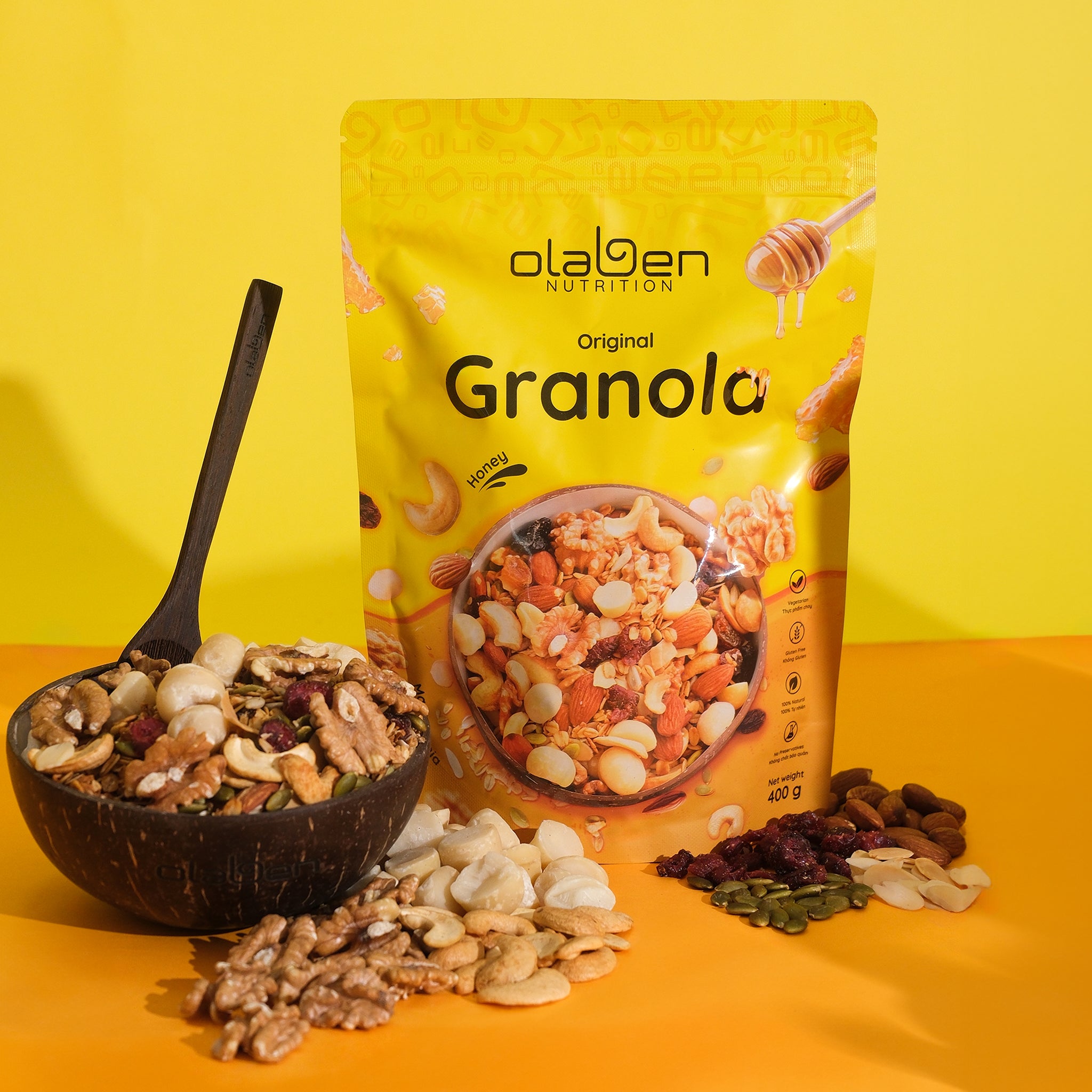
Goji Berries: Real Benefits, Daily Amount and Safety
 Image generated with AI — may not represent the actual product.
In short
Goji berries are rich in fibre and zeaxanthin, but nearly half their weight is sugar. What the evidence shows and who should be careful.
ⓘ
The Olaben Kitchen shares recipes and food inspiration only. This is not medical or nutritional advice. If you have a health condition, allergies or specific dietary needs, please consult a qualified professional.
Nutrition (dried, per 100g, USDA)
|
Nutrient |
Amount |
|
Calories |
349 kcal |
|
Sugar |
45.6g |
|
Fibre |
13.0g |
|
Protein |
14.3g |
|
Iron |
6.8mg |

Evidence
- Eyes: a small UC Davis study gave adults aged 45 to 65 28g of dried goji five times a week for 90 days. Macular pigment density increased (Li et al., Nutrients, 2021). The result is encouraging, but the goji group was only about 13 people.
- Other claims (liver, fertility, cancer, weight loss) rest mostly on animal and lab studies.

How much
About 10 to 15g a day as food. That is roughly 35 to 50 calories.
Cautions
- Warfarin: at least five case reports describe raised INR in people on warfarin after drinking goji tea or wine.
- Diabetes medication: goji may add to its glucose-lowering effect.
- Nightshade allergy: goji belongs to the same family as tomatoes and peppers.
- Pregnancy: ask a doctor before regular use.
- Buying: buy from reputable brands to avoid sulphite-treated or dyed berries.
Try goji at breakfast in our Jujube Goji Burst granola.

General information, not medical advice.
More from the kitchen
 How to Choose a Breakfast Cereal: Reading the LabelTwo “healthy-looking” cereals can differ fivefold in sugar. How to read labels per 100g,…
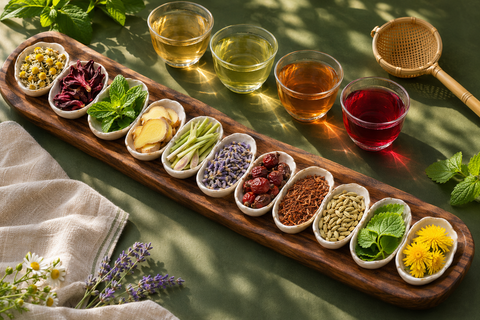 Herbal Tea Guide: 11 Common Types and Safety NotesTrue herbal teas are caffeine-free, but not every herb suits everyone. Eleven common herbs,…
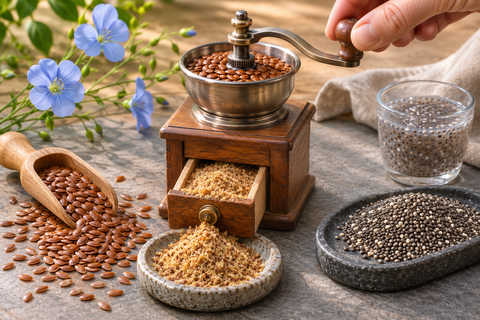 Flaxseed: Benefits, Why Grind It, and Flax vs ChiaWhole flaxseed mostly passes straight through you. Why to grind it, how much is…