
Brown Rice Tea: Benefits and How to Make It at Home
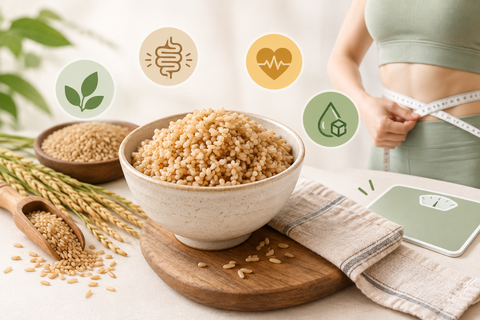
 Image generated with AI — may not represent the actual product.
In short
Roasted brown rice tea is toasty, caffeine-free, and easy to make. What it actually does, the honest limits, and the roast-and-brew method.
The Olaben Kitchen shares recipes and food inspiration only. This is not medical or nutritional advice. If you have a health condition, allergies or specific dietary needs, please consult a qualified professional.
Brown rice tea is roasted whole-grain rice steeped in hot water, giving a warm, toasty, slightly nutty drink. In Japan the roasted rice is often blended with green tea to make genmaicha, but on its own, roasted brown rice tea is caffeine-free and very easy to make from rice you already have. Here is what it is, what it honestly does, and how to make it.
What it is
Two versions share the name, and the difference matters.
- Plain roasted brown rice tea: just roasted brown rice steeped in water. Caffeine-free, because there is no tea leaf in it.
- Genmaicha: roasted brown rice blended with green tea. This one contains caffeine, from the green tea.
If you want a caffeine-free evening drink, make the plain version, or check that what you buy is not blended with green tea.

What it is good for (honestly)
The honest headline: brown rice tea is a pleasant, warming, caffeine-free drink, and that is reason enough to drink it. The bigger health claims deserve care.
It is caffeine-free (the plain version), which is a real, verifiable point. It works late in the day when tea or coffee would keep you up.
It is hydrating and low in calories, essentially water with flavour, so it is an easy swap for sweeter drinks.
It carries some antioxidants from the roasted grain. Real, but modest, and you should not expect a cup of rice tea to do what a balanced diet does.
What brown rice tea is not: a detox, a fat burner, or a treatment for anything. You will see all three claimed. None is supported, and a food or drink brand cannot honestly say them. It is a nice drink with a light nutritional bonus, and that is a fair thing to enjoy it for.
How to make it
Roast the rice first, which is where the flavour comes from.
- Roast raw brown rice in a dry pan over medium heat, stirring, for 5 to 10 minutes until it turns golden and smells toasty and nutty. Do not let it burn; burnt rice tastes bitter. You can roast a batch and keep it.
- Steep about 2 tablespoons of roasted rice in 500ml of just-boiled water for 5 to 10 minutes. Longer steeping gives a stronger, toastier cup.
- Strain and drink hot, or chill it over ice.
You can reuse the rice for a second, lighter brew, and the softened roasted rice at the end is edible.

When to drink it
Any time, and it is especially good in the evening precisely because the plain version has no caffeine, unlike the ginger and lemongrass warmth of our Gut Love tea or a bedtime cup. A warm, caffeine-free drink is a pleasant way to close a meal or an evening.
If you like brown rice as a grain but not as plain rice, tea is one of several ways to enjoy it, alongside brown rice bars. The grain itself is covered in brown rice benefits.
FAQ
Does brown rice tea have caffeine? Plain roasted brown rice tea has none. Genmaicha, which blends it with green tea, does. Check the label if caffeine matters to you.
What are the benefits of brown rice tea? Mainly that it is a warm, caffeine-free, low-calorie drink with some antioxidants. The stronger “detox” or weight-loss claims are not supported.
How do you make brown rice tea? Roast brown rice in a dry pan until golden and toasty, then steep about 2 tablespoons in 500ml hot water for 5 to 10 minutes and strain.
Can I drink brown rice tea at night? Yes, the plain version, since it is caffeine-free. That is one of its main advantages.
Does brown rice tea help you lose weight? No food or drink does that on its own. As a swap for sugary drinks it is a lower-calorie choice, which can help, but the tea itself is not a fat burner.
General information, not medical advice.
More from the kitchen
 Seaweed: Benefits, Iodine, and Whether Snack Seaweed Is HealthySeaweed is nutrient-dense and low in calories, with one nutrient you can get too…
 GuidesHow to Cook Brown Rice: Ratio, Rice Cooker, and TimingBrown rice fails two ways: undercooked and hard, or waterlogged and mushy. The water…
 GuidesBrown Rice: Benefits, Calories, and the Weight QuestionBrown rice keeps the bran that white rice loses, which changes the fibre, the…